

Even with strong documentation and accurate coding, some chiropractic claims will be denied. Check out our guide Best Coding and Documentation Practices for Chiropractors. The key to protecting revenue is having a structured denial management and appeal process.
Proper denial handling can significantly recover lost reimbursements.
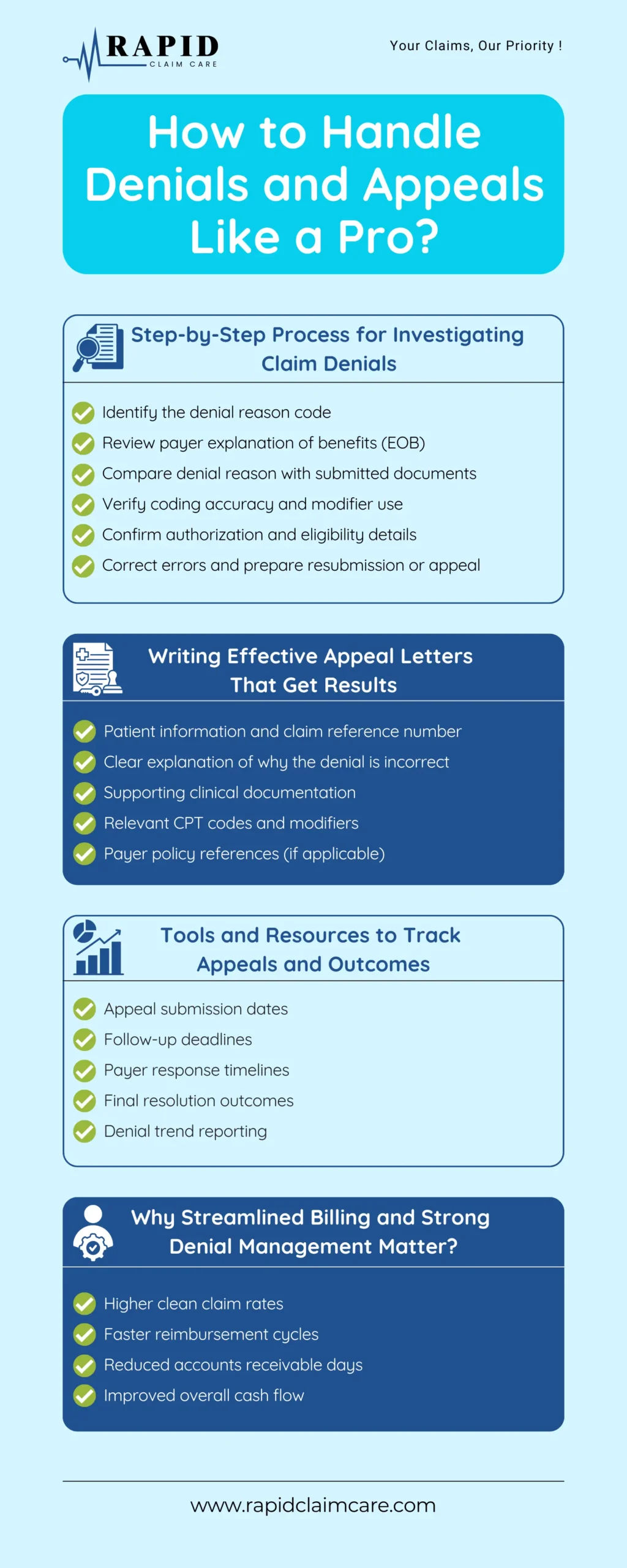
When a chiropractic claim is denied, follow this structured approach:
Tracking denial trends can reveal systemic billing issues that need correction.


A strong appeal letter should be clear, factual, and supported by documentation.
Include:
Avoid emotional language. Focus on objective evidence of medical necessity and compliance with payer guidelines.
Timely appeals increase the likelihood of reimbursement recovery.

Without a tracking system, appeals can be forgotten, resulting in permanent revenue loss.
Effective denial tracking should include:
Weekly review of accounts receivable aging reports helps prevent missed filing deadlines and identifies recurring denial patterns.

Chiropractic practices that implement structured billing workflows and proactive denial management typically experience:
Optimizing your billing process isn’t just administrative, it directly impacts your practice’s profitability and long-term financial stability.
Denied claims and missed appeals shouldn’t cost your chiropractic practice another dollar. At Rapid ClaimCare, we specialize in turning denials into paid claims through expert documentation review, precise coding, and aggressive appeal management.
Whether you’re dealing with recurring denials or just want to strengthen your billing workflow, our team is ready to help you recover what you’ve earned and keep it flowing.
Discover your top denial reasons with a free billing analysis.
Limited slots!

Saad Ahmed Turk is a ROI-driven Healthcare SEO and Growth Strategist helping clinics and service-based healthcare businesses scale through AI-powered search marketing. As Head of Marketing & Growth at RCC, he builds and optimizes scalable systems using SEO, AEO, GEO, automation, and AI tools like GoHighLevel to drive consistent patient acquisition and revenue growth.
Chiropractic claims are most often denied due to lack of medical necessity documentation, incorrect CPT codes or modifiers, missing prior authorization, or eligibility issues at the time of service.
Appeal deadlines vary by payer, but most insurers require appeals to be submitted within 30 to 180 days of the denial date. Always check the specific payer's EOB for their filing deadline.
An effective appeal letter should include the patient's information, claim reference number, denial reason, supporting clinical notes, relevant CPT codes, and references to payer policy or medical necessity guidelines.
Practices can reduce denials by verifying patient eligibility before every visit, using accurate coding with proper modifiers, maintaining thorough SOAP notes, and conducting regular audits of billing workflows.
Denial trend reporting tracks recurring denial patterns across claims to identify systemic billing errors, payer-specific issues, or documentation gaps, helping practices fix root causes and improve their clean claim rate over time.