

An inefficient billing workflow can lead to repeated denials, delayed reimbursements, and unnecessary revenue loss. Standardizing your chiropractic billing process improves clean claim rates and strengthens overall revenue cycle performance.
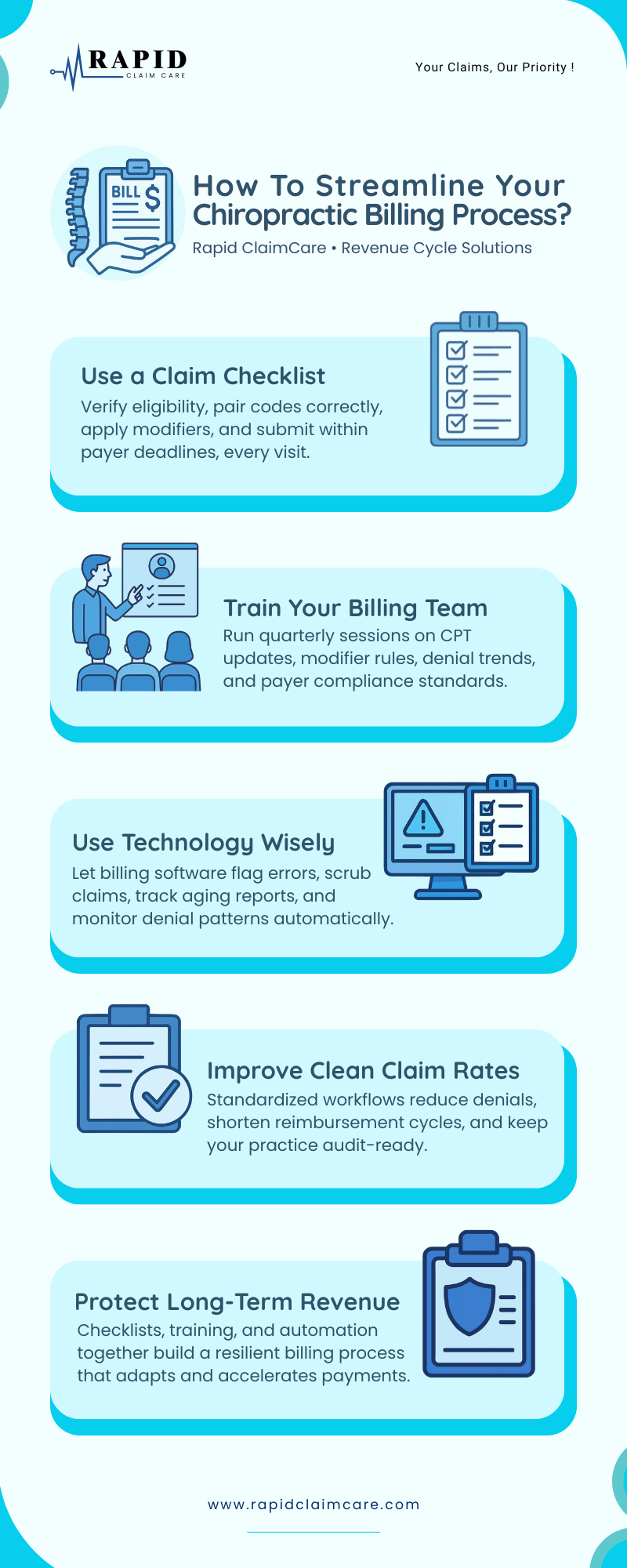

A structured billing checklist reduces preventable errors before claims are submitted.
Your chiropractic claim submission checklist should include:
Using a checklist ensures consistency and prevents small mistakes that lead to major payment delays. For a smoother billing process, check out our free Chiropractic Billing Blueprint.
Pro Tip: Review claims within 24–48 hours of the patient visit to maintain submission speed and accuracy.

Insurance regulations and payer policies change frequently. Without ongoing training, billing teams may unknowingly submit outdated or non-compliant claims.
Regular training should cover:
Quarterly training sessions help reduce recurring billing errors and improve long-term reimbursement performance.

Manual processes increase the likelihood of coding and submission errors.
Modern chiropractic billing systems can:
Using billing software and automation tools improves efficiency, reduces administrative workload, and accelerates payment cycles.
Discover your top denial reasons with a free billing analysis.
Limited slots!

Kamran Kazam is the Director of Billing at Rapid ClaimCare with over a decade of experience optimizing revenue cycles for chiropractic clinics, mental health practices, and multi-specialty groups. He specializes in improving clean claim rates, reducing denials, and accelerating cash flow through data-driven revenue cycle management strategies. Kamran works closely with healthcare providers to streamline billing operations, strengthen compliance, and increase collection performance without adding administrative burden.
To streamline your chiropractic billing process, implement a standardized workflow that includes eligibility verification, accurate coding, proper documentation, and timely claim submission. Using a checklist and automation tools can significantly reduce errors and improve reimbursement speed.
The most common causes of claim denials include incorrect CPT and diagnosis code pairing, missing modifiers, incomplete documentation, lack of authorization, and late submissions. A structured billing checklist helps prevent these avoidable mistakes.
A chiropractic claim submission checklist ensures every claim is accurate and complete before submission. It improves clean claim rates, reduces denials, and helps maintain consistent billing performance across your practice.
Chiropractic billing teams should receive training at least quarterly. Regular updates on CPT codes, payer policies, and compliance requirements help reduce errors and keep your billing process aligned with current regulations.
Chiropractic billing software improves efficiency by automating claim scrubbing, flagging missing information, tracking denials, and generating reports. These tools reduce human error, speed up reimbursements, and optimize revenue cycle management.