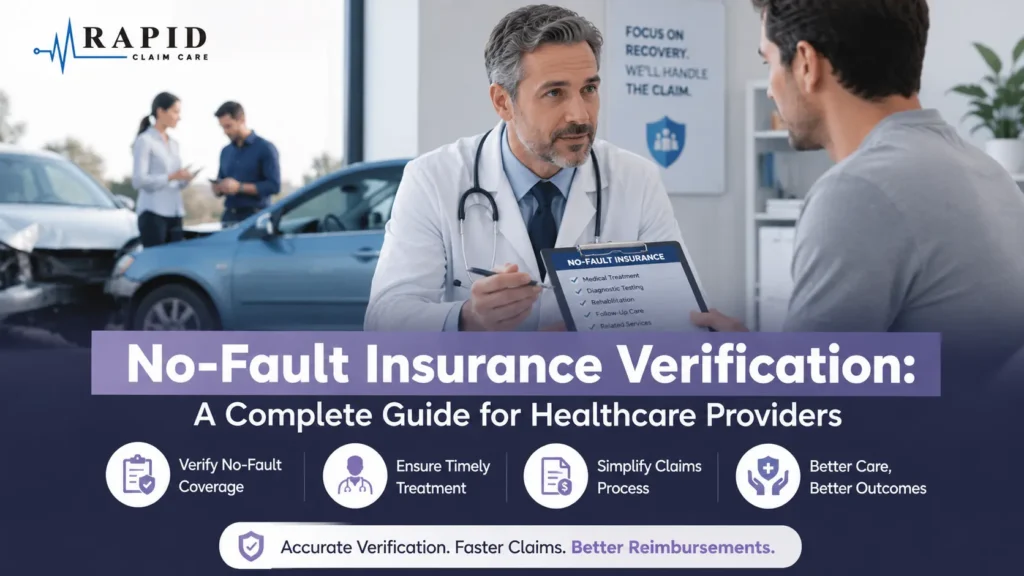
No-Fault Insurance Verification: A Complete Guide for Healthcare Providers
No-fault insurance claims can be highly profitable for healthcare providers, but they also come with unique eligibility requirements, strict filing deadlines, and complex documentation standards. One of the most important steps in the reimbursement process is no-fault insurance verification.
Failure to verify coverage properly can result in claim denials, delayed payments, increased administrative costs, and lost revenue. For medical practices, physical therapy clinics, chiropractic offices, diagnostic imaging centers, and other healthcare providers treating accident-related injuries, an effective insurance verification process is essential.
This guide explains everything healthcare providers need to know about no-fault insurance verification, including why it matters, what information should be verified, common mistakes to avoid, and best practices for improving claim approval rates.
What Is No-Fault Insurance Verification?
No-fault insurance verification is the process of confirming a patient’s insurance coverage, claim eligibility, policy status, and accident-related benefits before providing treatment or submitting claims.
The verification process helps healthcare providers determine:
- Whether coverage is active
- Available medical benefits
- Policy limitations
- Filing deadlines
- Claim requirements
- Authorization requirements
- Coverage eligibility
By verifying insurance information early, providers can reduce claim denials and accelerate reimbursement.
No-fault insurance verification is the process of confirming a patient’s active no-fault insurance coverage, accident claim information, benefits eligibility, policy limits, and billing requirements before treatment or claim submission.
Why No-Fault Insurance Verification Is Important
Unlike traditional health insurance, no-fault claims involve automobile accident coverage and often require additional documentation and eligibility validation.
Without proper verification, providers may face:
- Claim denials
- Delayed payments
- Coverage disputes
- Authorization issues
- Revenue loss
- Compliance risks
Verifying coverage before treatment helps prevent many of these issues.
Understanding How No-Fault Insurance Works
No-fault insurance is designed to provide medical benefits for individuals injured in automobile accidents regardless of who caused the accident.
Coverage may include:
- Medical treatment
- Rehabilitation services
- Diagnostic testing
- Physical therapy
- Chiropractic care
- Transportation expenses
- Lost wage benefits
Because no-fault claims involve specific insurance regulations, verification is a critical first step in the billing process.
What Information Should Be Verified?
A complete no-fault insurance verification process should include several key areas.
Patient Information
Verify:
- Full legal name
- Date of birth
- Contact information
- Accident date
- Accident claim details
Accurate demographic information helps prevent claim submission errors.
Insurance Carrier Information
Confirm:
- Insurance company name
- Claim number
- Policy number
- Adjuster information
- Contact details
Missing or incorrect carrier information can delay claim processing.
Active Coverage Status
Providers should verify whether:
- Coverage is active
- The policy was valid on the accident date
- The claim has been opened
- Benefits remain available
Coverage verification helps identify potential reimbursement issues early.
Available Medical Benefits
Confirm:
- Benefit limits
- Covered services
- Treatment restrictions
- Remaining coverage amounts
- Network requirements
Understanding available benefits helps providers avoid non-covered services.
Authorization Requirements
Some no-fault insurance carriers may require:
- Prior authorization
- Treatment approvals
- Specialist referrals
- Diagnostic testing approvals
Failing to obtain required authorizations can result in claim denials.
Step-by-Step No-Fault Insurance Verification Process
Step 1: Collect Patient Information
Gather all relevant accident and insurance information during intake.
Required information often includes:
- Insurance card
- Claim number
- Accident date
- Attorney information (if applicable)
- Adjuster details
Step 2: Contact the Insurance Carrier
Reach out to the insurance company to confirm coverage details.
During verification, ask about:
- Policy status
- Claim eligibility
- Benefit limits
- Authorization requirements
- Filing deadlines
Step 3: Confirm Claim Status
Verify that the no-fault claim has been officially established and remains active.
Inactive or incomplete claims may cause reimbursement delays.
Step 4: Document Verification Results
Maintain detailed records of:
- Verification date
- Representative name
- Reference numbers
- Coverage information
- Benefit details
Documentation can help resolve future disputes.
Step 5: Communicate Findings to Clinical and Billing Teams
Ensure all departments understand:
- Coverage limitations
- Authorization requirements
- Billing procedures
- Documentation expectations
Strong communication improves claim accuracy.
Common No-Fault Insurance Verification Mistakes
Failing to Verify Coverage Before Treatment
Providing services before confirming eligibility increases financial risk.
Missing Claim Information
Incomplete claim details can result in rejected claims.
Ignoring Authorization Requirements
Some treatments may require approval before services are rendered.
Failure to Track Coverage Limits
Exceeding policy limits can create reimbursement issues.
Poor Documentation
Insufficient verification records make dispute resolution more difficult.
How Verification Impacts Medical Billing
Insurance verification directly affects the billing process.
Accurate verification helps:
- Reduce denials
- Improve clean claim rates
- Accelerate reimbursement
- Improve compliance
- Reduce administrative workload
Many healthcare providers utilize professional Insurance Verification Services to improve verification accuracy and support efficient claims management.
Best Practices for No-Fault Insurance Verification
Verify Coverage Before Every Treatment Phase
Coverage status may change throughout treatment.
Use Standardized Verification Checklists
Checklists help ensure consistency and completeness.
Maintain Detailed Records
Document all verification interactions for future reference.
Train Staff Regularly
Insurance requirements frequently change.
Continuous education supports better outcomes.
Leverage Professional Billing Support
Many healthcare organizations partner with expert Medical Billing Services providers to manage insurance verification, claims processing, reimbursement follow-up, and compliance requirements.
No-Fault Insurance Verification Requirements by State
No-fault insurance regulations vary significantly across states.
Differences may include:
- Benefit limits
- Filing deadlines
- Treatment guidelines
- Documentation standards
- Reimbursement rules
Providers serving accident patients in New York should also review our Medical Billing Services in New York resources for state-specific billing and compliance guidance.
Benefits of Effective No-Fault Insurance Verification
Healthcare providers that implement strong verification procedures often experience:
- Higher claim approval rates
- Faster reimbursements
- Fewer denials
- Better cash flow
- Reduced administrative costs
- Improved patient satisfaction
Verification acts as the foundation of successful no-fault billing.
Frequently Asked Questions
What is no-fault insurance verification?
No-fault insurance verification is the process of confirming insurance coverage, claim eligibility, policy status, and available benefits before treatment or billing.
Why is insurance verification important for no-fault claims?
Verification helps reduce claim denials, identify coverage limitations, confirm eligibility, and improve reimbursement outcomes.
What information is needed for no-fault insurance verification?
Providers typically need the patient’s information, accident details, claim number, insurance carrier information, and policy details.
How often should no-fault coverage be verified?
Coverage should be verified at the start of treatment and periodically throughout the care process, especially for long-term cases.
Can insurance verification improve reimbursement rates?
Yes. Accurate verification helps prevent claim errors, coverage disputes, and denied claims, resulting in more successful reimbursements.
Conclusion
No-fault insurance verification is one of the most important steps in the accident-related medical billing process. By confirming coverage, validating claim information, understanding policy limitations, and documenting verification results, healthcare providers can significantly reduce denials and improve reimbursement performance.
Organizations that prioritize accurate insurance verification create a stronger foundation for successful billing, faster payments, and improved revenue cycle management. As no-fault regulations continue to evolve, maintaining a proactive verification strategy remains essential for long-term financial success.