Workplace injuries can create significant administrative and financial challenges for healthcare providers, employers, insurance carriers, and injured employees. Understanding the workers’ compensation claim process is essential for ensuring injured workers receive appropriate care while providers obtain timely reimbursement for services rendered.
The workers’ compensation system is designed to provide medical benefits and wage replacement for employees who experience work-related injuries or occupational illnesses. However, navigating the claims process can be complex, especially when documentation requirements, insurance regulations, and billing procedures are involved.
This guide explains every stage of the workers’ compensation claim process, common challenges, and best practices healthcare providers can implement to improve outcomes and reduce claim delays.
What Is the Workers’ Compensation Claim Process?
The workers’ compensation claim process is the structured procedure through which an injured employee reports a workplace injury, receives medical treatment, and obtains benefits through their employer’s workers’ compensation insurance policy.
The process typically involves:
- Injury reporting
- Employer notification
- Claim filing
- Medical evaluation
- Treatment authorization
- Claim review
- Benefit determination
- Ongoing case management
Each step plays a critical role in determining whether the claim is approved and how quickly medical providers receive reimbursement.
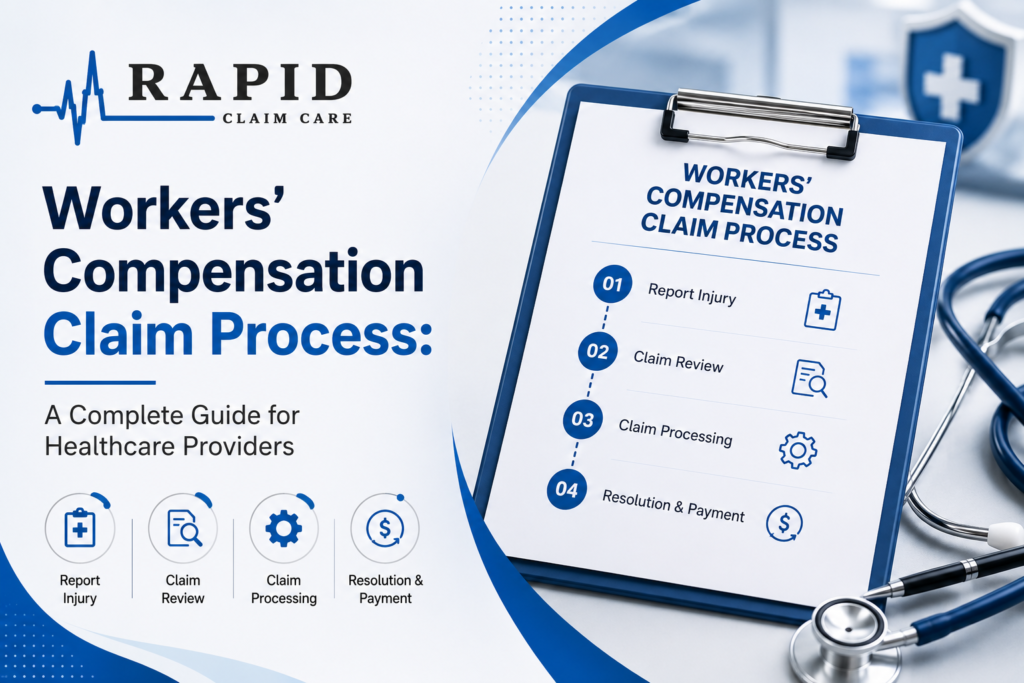
The workers’ compensation claim process begins when an employee reports a workplace injury to their employer. The employer files a claim with the workers’ compensation insurer, medical treatment is provided, documentation is reviewed, and the insurer determines eligibility for benefits and reimbursement.
Why Understanding the Workers’ Compensation Claim Process Matters
Healthcare providers who understand the workers’ compensation workflow can:
- Reduce claim denials
- Improve documentation accuracy
- Accelerate reimbursements
- Strengthen compliance efforts
- Enhance patient outcomes
The better providers understand claim requirements, the more efficiently they can navigate the system.
Step 1: Workplace Injury Occurs
The workers’ compensation process starts when an employee experiences a work-related injury or develops an occupational illness.
Examples include:
- Slips and falls
- Repetitive stress injuries
- Back injuries
- Machinery accidents
- Chemical exposure
- Occupational diseases
Immediate reporting helps preserve claim eligibility and facilitates timely treatment.
Step 2: Employee Reports the Injury
The injured employee must notify their employer about the injury.
Key information generally includes:
- Date of injury
- Time of injury
- Location of incident
- Description of what happened
- Witness information
Failure to report injuries promptly may complicate claim approval.
Step 3: Employer Files the Workers’ Compensation Claim
Once notified, the employer submits the injury report to their workers’ compensation insurance carrier.
The claim filing generally includes:
- Employee information
- Employer information
- Injury details
- Incident reports
- Initial medical findings
Accurate reporting helps prevent processing delays.
Step 4: Initial Medical Evaluation
The injured worker receives medical treatment from an authorized healthcare provider.
During the evaluation, providers document:
- Injury history
- Physical examination findings
- Diagnosis
- Treatment recommendations
- Work restrictions
Detailed documentation is essential because it forms the foundation of the entire claim.
Healthcare organizations often rely on professional Medical Billing Services to ensure documentation and claim submissions meet payer requirements and reduce administrative burdens.
Step 5: Claim Investigation and Review
The insurance carrier reviews the submitted claim to determine:
- Whether the injury is work-related
- Eligibility for benefits
- Medical necessity of treatment
- Potential claim risks
Insurance adjusters may request:
- Additional medical records
- Employer statements
- Witness reports
- Treatment documentation
Prompt responses help move claims forward.
Step 6: Claim Approval or Denial
After investigation, the insurer makes a determination.
Approved Claims
If approved, benefits may include:
- Medical treatment coverage
- Rehabilitation services
- Prescription coverage
- Wage replacement benefits
Denied Claims
Claims may be denied because of:
- Insufficient documentation
- Disputed injury circumstances
- Missed reporting deadlines
- Lack of medical evidence
Proper documentation significantly improves approval rates.
Step 7: Ongoing Medical Treatment
Many workplace injuries require ongoing care.
Treatment may involve:
- Physical therapy
- Specialist consultations
- Diagnostic testing
- Surgical procedures
- Follow-up evaluations
Some services may require prior authorization before treatment can proceed.
Step 8: Medical Billing and Reimbursement
After treatment is provided, healthcare providers submit claims to the workers’ compensation insurer.
Successful reimbursement depends on:
- Accurate coding
- Complete documentation
- Authorization compliance
- Timely filing
Providers seeking to optimize collections often partner with specialized Workers’ Compensation Billing Services that understand payer-specific regulations and workers’ compensation requirements.
For a deeper understanding of reimbursement regulations and compliance requirements, read our guide on Workers’ Compensation Billing Rules.
Step 9: Return-to-Work Evaluation
As recovery progresses, providers assess whether the employee can safely return to work.
Possible outcomes include:
Full Duty Return
The employee resumes regular job responsibilities.
Modified Duty
Temporary restrictions allow partial work activities.
Continued Leave
Additional recovery time may be required.
Accurate work status reporting is critical throughout the claim lifecycle.
Step 10: Claim Resolution and Closure
The claim concludes when:
- Treatment is completed
- Recovery stabilizes
- Benefits end
- Settlement occurs
Final documentation helps ensure compliance and proper claim closure.
Common Challenges in the Workers’ Compensation Claim Process
Documentation Errors
Incomplete records frequently cause delays and denials.
Authorization Issues
Missing approvals may lead to reimbursement problems.
Delayed Reporting
Late injury reporting can complicate claim investigations.
Coding Mistakes
Incorrect diagnosis or procedure codes can affect payment outcomes.
Communication Gaps
Poor communication among providers, employers, and insurers often slows claim resolution.
Best Practices for Healthcare Providers
Document Everything Thoroughly
Detailed records strengthen claim support and reduce disputes.
Verify Claim Information Early
Confirm insurance details before treatment whenever possible.
Submit Claims Promptly
Meeting deadlines improves reimbursement success.
Monitor Claim Status Regularly
Tracking claims helps identify issues before they become larger problems.
Use Specialized Billing Support
Many providers leverage expert Medical Billing Services to improve efficiency, reduce denials, and maintain compliance throughout the workers’ compensation process.
Workers’ Compensation Claims Across Different States
Although workers’ compensation programs share common principles, regulations vary by state. Providers should stay informed about state-specific billing requirements, fee schedules, and reimbursement rules.
If your organization operates in California, review our Medical Billing Services in California resources to understand local compliance and reimbursement considerations.
Frequently Asked Questions
What is the workers’ compensation claim process?
The workers’ compensation claim process is the procedure through which workplace injuries are reported, evaluated, treated, reviewed by insurers, and reimbursed under workers’ compensation insurance coverage.
How long does a workers’ compensation claim take?
The timeline varies depending on injury severity, documentation quality, insurer review processes, and state regulations.
Why are workers’ compensation claims denied?
Claims may be denied because of insufficient documentation, reporting delays, eligibility disputes, or missing medical evidence.
How can healthcare providers improve workers’ compensation claim approvals?
Providers can improve approval rates by maintaining accurate documentation, using proper coding, obtaining authorizations, and submitting claims on time.
What role does medical billing play in the workers’ compensation claim process?
Medical billing ensures services are properly documented, coded, submitted, and reimbursed according to workers’ compensation regulations.
Conclusion
The workers’ compensation claim process involves multiple stakeholders, detailed documentation requirements, and strict compliance standards. Healthcare providers who understand each stage of the process can reduce claim delays, improve reimbursement rates, and support better patient outcomes.
By implementing strong documentation practices, maintaining regulatory compliance, and utilizing specialized medical billing expertise, organizations can navigate workers’ compensation claims more efficiently while maximizing revenue recovery and operational performance.