By Kamran Kazam | Director of Billing, Rapid ClaimCare
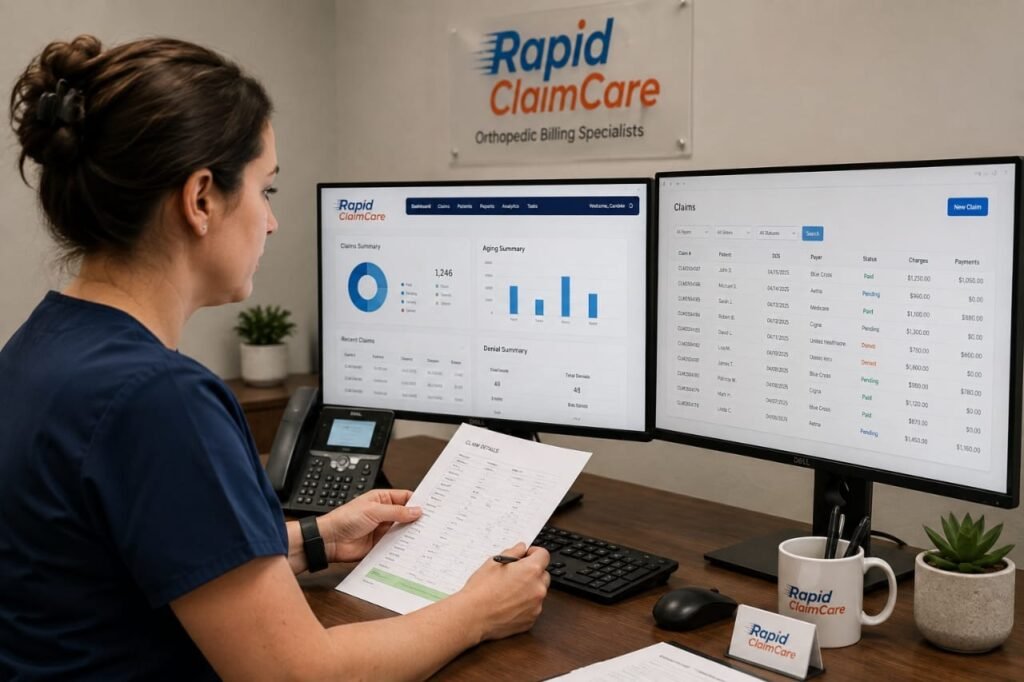
If you manage billing for an orthopedic practice—or a family medicine, community health, or multispecialty clinic that treats a steady volume of fractures, joint injections, and post-surgical follow-ups—you’ve had this conversation more than once: “Why did this claim get denied again?”
Orthopedic billing isn’t like billing a routine office visit. A single fracture care claim carries a global period, a modifier that decides whether a follow-up visit gets paid at all, and a DME component that gets kicked back if the documentation isn’t airtight. That’s exactly why practices across Alabama are turning to dedicated orthopedic billing services in Alabama instead of stretching generalist staff thin across claims they weren’t trained to handle.
At Rapid ClaimCare, we’ve built specialty-specific billing workflows for practices across the country—and orthopedic claims are consistently among the most misfiled we see. Here’s what’s actually causing the leaks, why Alabama’s payer landscape makes this harder than in other states, and what a fix looks like without adding another salary to your payroll.
Why Orthopedic Billing Is Harder Than General Medical Billing?
Most billing staff are trained to handle a broad mix: office visits, preventive care, chronic disease management, and referrals. That generalist training is exactly what makes ortho claims so easy to get wrong.
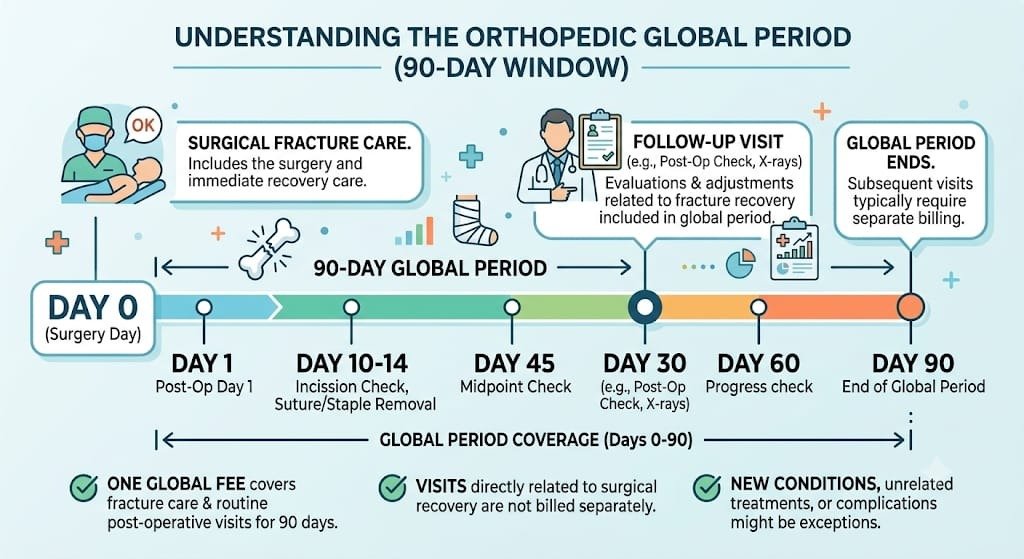
Here’s a pattern that shows up constantly. A physician treats a distal radius fracture (CPT 25605), then sees the patient again three weeks later for a follow-up. That visit falls inside the 90-day global period. If it gets billed as a separate E/M service without modifier -24 or -25 attached correctly—and without documentation showing the visit was unrelated to the original procedure—the claim gets denied. Not delayed. Denied. Catch that pattern happening across a full patient panel, and you’re not looking at one lost claim. You’re looking at a recurring revenue category quietly disappearing every month.
The same thing happens with:
- Modifier misuse on staged or related procedures (-58, -78, -79)—these tell the payer whether a follow-up procedure during the global period was planned, related to a complication, or unrelated.
- DME billing for braces, orthotics, and casting supplies, which needs separate documentation of medical necessity most generalist billers aren’t trained to capture.
- Injections bundled with E/M visits, where a missing modifier -25 is one of the most common and most avoidable denial triggers.
This is what orthopedic medical coding services exist to solve. Not because your current staff isn’t capable, but because ortho coding is its own specialty, and treating it as a subset of general billing is where the money starts leaking out.
The Alabama Billing Landscape: Payers and Rules That Actually Matter Here
This is the part most billing guides skip entirely, and it’s costing Alabama practices money.
Alabama Medicaid has its own prior authorization requirements for many orthopedic procedures and DME items, plus its own timely filing deadlines. A claim that would sail through in another state’s Medicaid program can get denied here simply because the prior auth wasn’t submitted in the format Alabama Medicaid expects.
Blue Cross Blue Shield of Alabama is the dominant commercial payer in the state, which means their coding conventions and documentation preferences matter more here than almost anywhere else. A billing partner who’s only worked with national payers elsewhere may not know BCBS-AL’s specific quirks, and that gap shows up directly in your denial rate.
Regional payers like Viva Health and UAB Health Plan add another layer that generic, one-size-fits-all billing companies frequently aren’t equipped for.
Workers’ compensation billing deserves its own callout because fractures and joint injuries are among the most common workers’ comp claim types, and Alabama’s system runs on its own fee schedule and rules—separate from commercial or government payers.
A billing partner without direct, current Alabama payer experience isn’t a neutral choice. It’s a hidden cost, one denied and resubmitted claim at a time. This is part of why Rapid ClaimCare builds state-specific billing knowledge into every market we serve — you can see how this plays out across our broader Alabama medical billing services as well.
Common Revenue Leaks in Alabama Orthopedic Practices
Undercoding and missed modifiers on fracture care. Covered above and worth repeating: small individually, significant across a full year of claims.
DME billing errors. Braces, orthotics, and casting materials require specific medical-necessity documentation. This is one of the most common — and most preventable — denial categories in ortho billing, and it’s exactly why we run DME billing as its own dedicated service line rather than folding it into general claims processing.
Inconsistent prior authorization tracking. When requirements vary by payer, and in Alabama they genuinely do, practices without a reliable tracking system lose revenue to auto-denials that had nothing to do with the quality of care provided.
AR aging from insufficient follow-up. A denied claim isn’t a lost claim—until nobody works it. This is exactly where dedicated orthopedic denial management services earn their cost: working denials before they age past the point of recovery, instead of letting them sit until they’re written off. Our denial management and AR recovery teams focus specifically on this stage of the cycle.
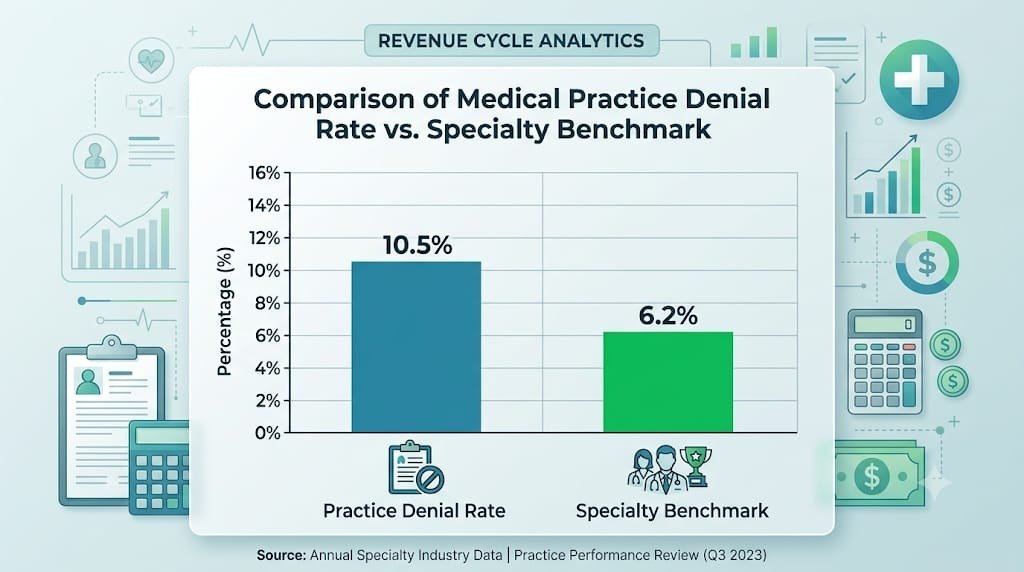
If you want a gut check, compare your denial rate and average AR days against orthopedic-specific benchmarks from AAOS or MGMA. A meaningfully worse number than the specialty average usually points to a specialization gap, not a staffing shortage—and it’s the kind of gap a medical billing audit will surface quickly.
Urban vs. Rural Alabama Practices: Different Billing Needs
There’s no single billing setup that fits every practice in this state.
Larger groups in Birmingham, Huntsville, Montgomery, and Mobile deal with higher claim volume and staffing needs that shift with provider turnover and seasonal spikes. For these practices, scalable outsourced support often makes more sense than building an in-house team sized for every peak.
Smaller and rural practices are usually working with thin administrative bandwidth already. A dedicated in-house ortho-trained biller often isn’t financially realistic—outsourced billing, even on a fractional basis, tends to be the more sustainable path.
Community health clinics frequently see a higher Medicaid mix, which raises the stakes on everything covered in the Alabama Medicaid section above.
The right setup depends on your size, payer mix, and existing capacity—not a one-size-fits-all package.
In-House vs. Outsourced: What Actually Improves Revenue
The cost of in-house billing goes beyond salary—benefits, ongoing training, software, and ramp-up time all factor in. For a generalist biller handling ortho claims alongside everything else, that investment often doesn’t translate into real specialization.
This is the core of what orthopedic revenue cycle management actually looks like when it’s handled by specialists rather than generalist staff: coders who focus on ortho claims specifically, without the overhead of full-time salaried positions. Rapid ClaimCare’s revenue cycle management approach is built around exactly this—full-cycle support from eligibility checks through final reimbursement, tailored to the specialty billing it entails.
The tradeoff with outsourcing is less direct day-to-day control, which is a fair consideration — but for most practices, closing the specialization gap outweighs it. One honest caveat: outsourcing isn’t automatically a fix. A vendor with no real orthopedic experience or Alabama payer familiarity can be just as inconsistent as an overstretched in-house team.
How to Choose an Orthopedic Billing Partner in Alabama
Ask these questions directly, and pay attention to how specifically they’re answered:
- Do you have documented experience with Alabama Medicaid and Blue Cross Blue Shield of Alabama specifically — not Medicaid or BCBS “nationally”?
- What’s your actual denial rate and average AR days, and can you show real data?
- Are your coders certified specifically in orthopedic coding, or is this generalist coding applied to ortho claims?
- What does onboarding look like, and does it integrate with our existing EHR/practice management software?
- Do you also handle credentialing, so payer enrollment doesn’t become a separate bottleneck?
- What’s the contract structure — is there a clear exit path, or are we locked in?
Red flags: vague performance claims with no supporting numbers, no specific Alabama payer knowledge when asked directly, and pricing that ignores your practice’s actual size and complexity.
Improve Revenue Without Adding Headcount
Everything here points to the same conclusion: the revenue leaks hurting Alabama orthopedic practices are usually a specialization gap, not a staffing shortage. Closing that gap — through specialized coding, Alabama-specific payer knowledge, and consistent denial follow-up — is what actually moves the needle.
If you’re seeing denial patterns you can’t quite explain, an AR backlog that keeps growing, or you’re just unsure whether your current billing setup is costing you money, get a free consultation from Rapid ClaimCare. We’ll review your current claims and denial data and show you exactly where the leaks are—no long-term commitment required to find out. You can also reach our team directly at sales@rapidclaimcare.com
Frequently Asked Questions
1. What makes orthopedic billing different from general medical billing? Orthopedic claims involve global periods, procedure-specific modifiers, and DME documentation that general E/M billing doesn’t require. A biller trained broadly across specialties often misses these ortho-specific rules, which is why dedicated orthopedic coding expertise matters.
2. Why does Alabama Medicaid deny orthopedic claims that would be approved elsewhere? Alabama Medicaid has its own prior authorization formats, documentation standards, and timely filing deadlines for orthopedic procedures and DME. A claim built for a different state’s Medicaid rules can fail here even if the care itself was fully justified.
3. Does Blue Cross Blue Shield of Alabama have different requirements than other BCBS plans? Yes. As the dominant commercial payer in the state, BCBS-AL has its own coding conventions and prior-authorization thresholds that a billing partner without in-state experience may not be familiar with.
4. How does workers’ compensation billing work for orthopedic injuries in Alabama? Alabama workers’ comp runs on its own state-specific fee schedule and filing rules, separate from commercial or government payer processes. Since fractures and joint injuries are among the most common workers’ comp claims, getting this right matters significantly for ortho-heavy practices.
5. What’s the most common reason orthopedic claims get denied? Modifier errors on claims within a global surgical period are one of the most frequent and avoidable causes—particularly missing -24, -25, -58, -78, or -79 modifiers on follow-up or staged procedures.
6. Should a small or rural practice outsource billing or hire in-house staff? It depends on claim volume and administrative bandwidth. Smaller and rural practices often find fractional outsourced billing more sustainable than the cost of a dedicated in-house ortho-trained hire, while larger groups may benefit more from scalable outsourced support.
7. What is orthopedic denial management, and why does it matter? It’s the process of tracking, appealing, and recovering denied or underpaid claims before they age past the point of recovery. Without consistent follow-up, denied claims often sit unworked until they’re written off entirely.
8. How much revenue do practices typically lose to billing errors? This varies by practice, but denial rates and AR days meaningfully above orthopedic specialty benchmarks (available through AAOS and MGMA) usually indicate a recoverable revenue gap worth investigating.
9. What questions should I ask before choosing a billing partner? Ask about their specific experience with Alabama Medicaid and BCBS-AL, their actual denial rate and AR days with supporting data, whether their coders hold orthopedic-specific certification, and their contract flexibility.
10. Can outsourcing billing actually improve revenue, or is it just a cost shift? When the partner has real orthopedic coding expertise and Alabama payer experience, outsourcing typically recovers more revenue than it costs—by reducing denials and shortening AR days. The value depends entirely on the partner’s actual specialization, not just the decision to outsource.
Kamran Kazam is the director of billing at Rapid ClaimCare, with over a decade of experience optimizing revenue cycles for orthopedic, chiropractic, and multi-specialty practices nationwide. He works directly with healthcare providers to improve clean claim rates, reduce denials, and strengthen collections without adding administrative burdens.