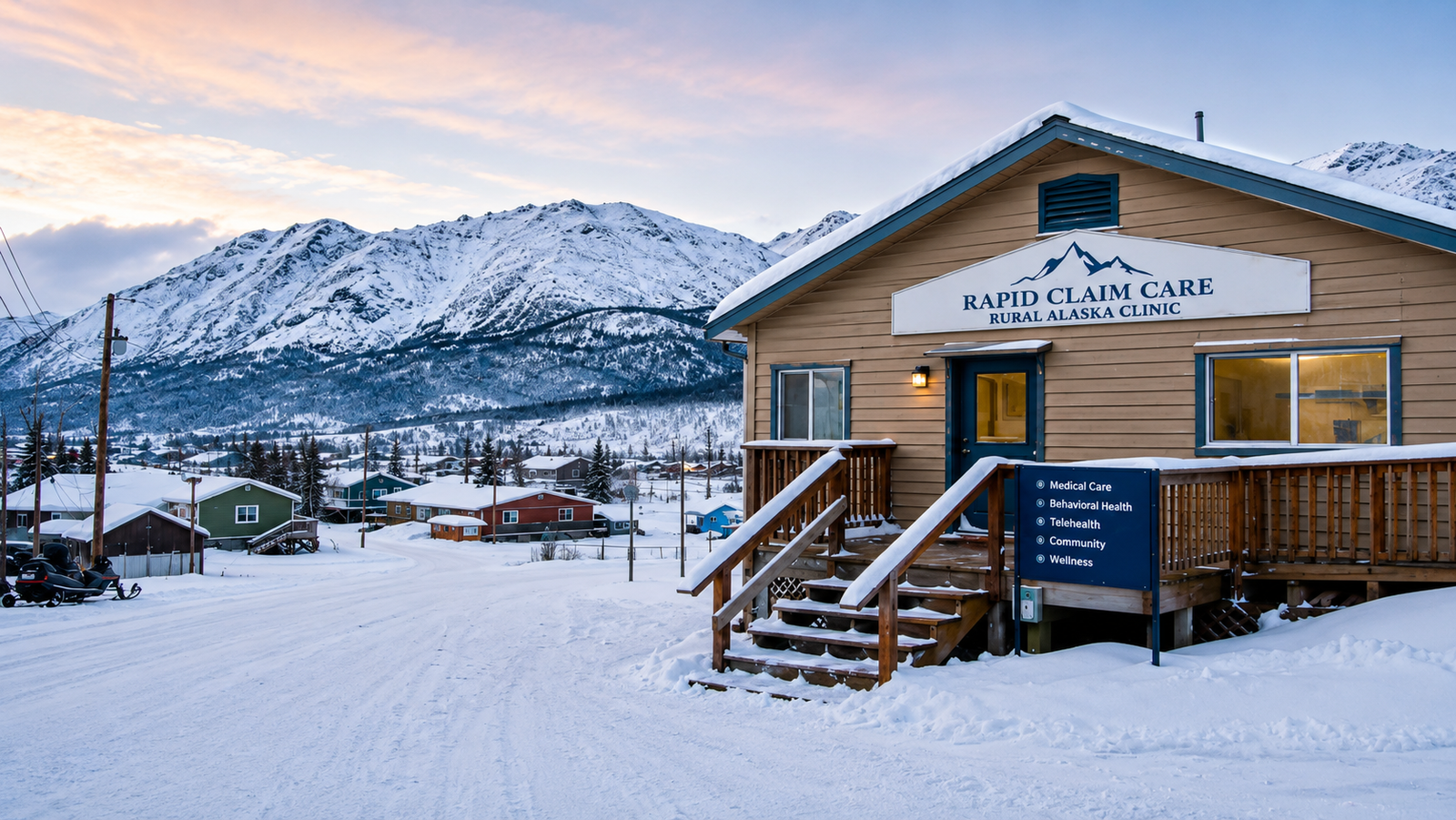
If you run a clinic in Bethel, Kodiak, or anywhere off the road system, you’ve probably had this experience already: you call a billing company, and they talk about “streamlining your revenue cycle” and “leveraging automation”—and somewhere in that pitch you realize they’ve never had to think about what happens when a claim needs to go out and your internet has been down for four days because of weather.
That’s exactly why finding the right medical billing company for rural healthcare providers in Alaska matters more than most practices realize until they’ve already signed a contract that doesn’t fit. Rural Alaska billing isn’t a smaller version of rural billing anywhere else. Between Critical Access Hospital reimbursement, Rural Health Clinic rate structures, tribal health billing, and communities that are genuinely only reachable by plane or boat, the environment here doesn’t look like rural Texas or rural Ohio.
This guide walks through what actually makes it different, what to ask a prospective billing partner, and where Rapid ClaimCare fits into that picture.
Why Rural Alaska Medical Billing Is Different From Anywhere Else
Alaska has one of the highest concentrations of critical access hospitals and rural health clinics per capita in the country, and a large share of primary care outside Anchorage and Fairbanks runs through tribal health organizations. Add in geography where a “short trip” to a regional hub can mean a bush flight, and you get a billing environment that layers several specialized systems on top of each other—often within a single clinic’s patient panel.
A billing team that’s only worked standard commercial claims in a Lower 48 metro area will hit unfamiliar territory fast: cost-based reimbursement instead of standard fee schedules, all-inclusive rate billing instead of line-item CPT coding, and workflows that need to survive an internet connection dropping mid-submission. None of that shows up in a generic RCM sales page. It shows up later, once you’re already a client and something’s gone wrong.
If you’re running medical billing for an independent physician practice in Alaska, this matters even more — a solo or small practice doesn’t have a billing department to absorb someone else’s learning curve. One missed nuance hits your revenue directly, not a department’s.
The Core Billing Challenges Facing Alaska’s Rural Practices
Critical Access Hospital Billing in Alaska
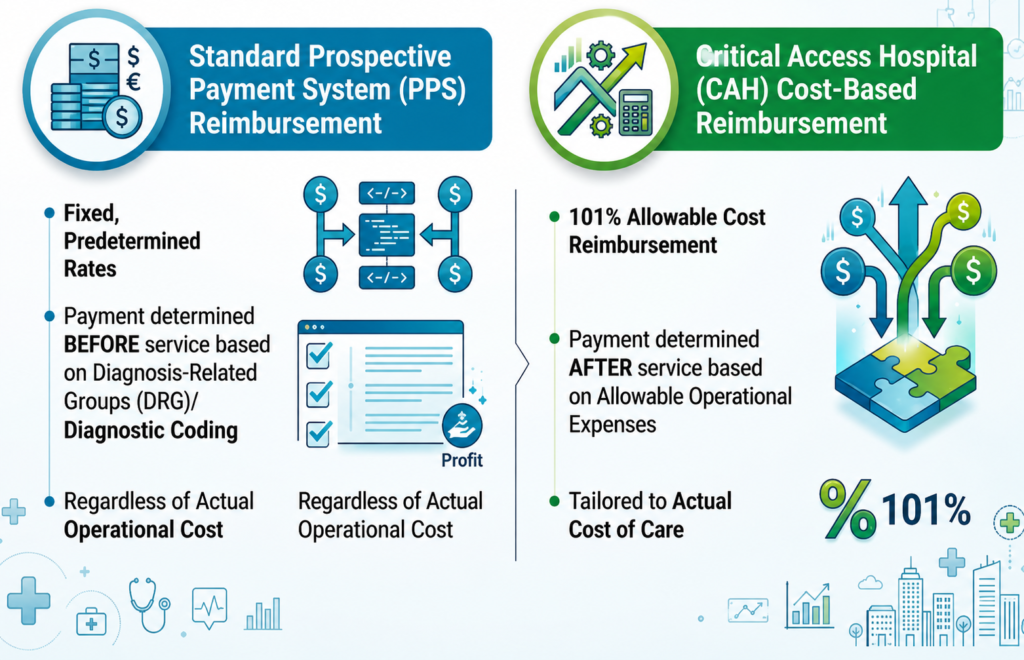
CAHs aren’t reimbursed the way most hospitals are. Instead of a standard prospective payment rate per diagnosis, they’re reimbursed based on actual reported costs — which means the annual cost report and how services get documented throughout the year directly affect the money that comes back. A biller who treats a CAH like a standard hospital won’t necessarily generate denials; the mistake shows up more quietly than that, as a lower-cost settlement months later.
Critical Access Hospital billing in Alaska is exactly the kind of thing worth asking a prospective billing partner about directly—not “Do you know what a CAH is?” But walk me through how you’d approach our cost report cycle.
Rural Health Clinic Billing
Rural health clinic billing runs on an all-inclusive rate (AIR) model—one rural health clinic’s rural health clinics flat encounter rate rather than itemized fee-for-service coding. It sounds simpler on paper, but it trips up billers used to coding every service separately. Getting AIR billing wrong usually means under-billing encounters that should’ve captured the full rate or misclassifying visit types in ways that don’t surface until a payer audit flags the pattern.
Alaska Medicaid Billing Nuances
Alaska Medicaid is administered through the state’s Department of Health, with its own prior authorization thresholds, timely filing windows, and covered service rules that don’t match Medicaid programs in other states. Alaska Medicaid billing experience specifically—not just general Medicaid experience—is worth confirming before you sign with anyone.
Tribal Health Billing in Alaska
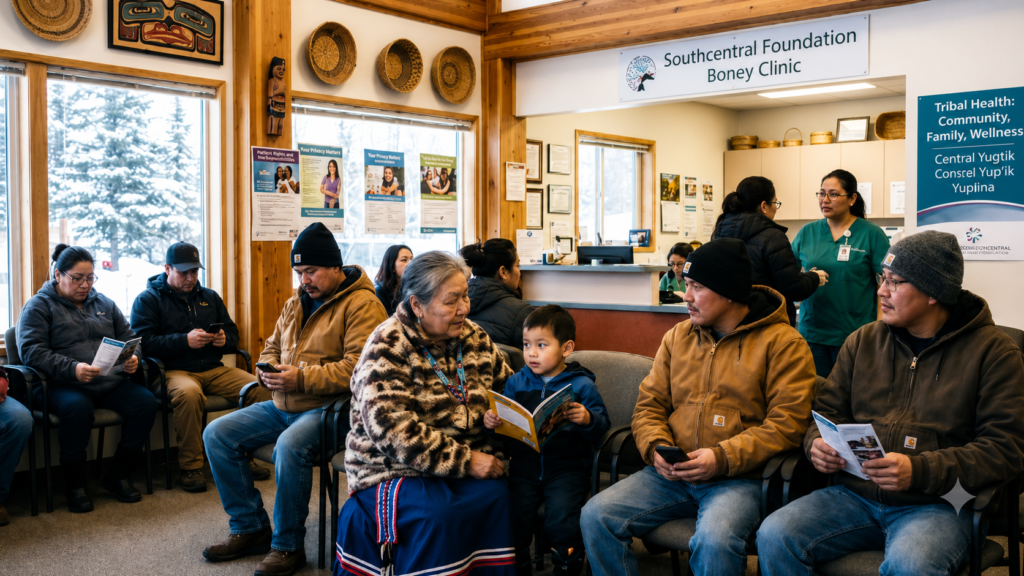
This is the piece almost nobody outside Alaska deals with. Between the Alaska Native Tribal Health Consortium and the regional tribal health organizations, a meaningful share of rural care runs through Purchased/Referred Care (PRC) claims, third-party billing for tribal programs, and the Community Health Aide Program—a model that’s genuinely unique to Alaska.
If your clinic serves, partners with, or refers to a tribal health organization, ask any prospective billing partner directly whether they’ve handled tribal health billing in Alaska before, and ask for specifics, not reassurance. This is specialized enough that general RCM experience doesn’t transfer automatically — it’s a fair, important question to press on, whoever you’re talking to.
Connectivity-Dependent, Offline-First Billing Workflows
Most billing software assumes constant connectivity. Most rural Alaska clinics don’t have it. A village clinic on satellite internet might lose connection for days during a storm, which means claims submission needs to be able to batch and hold rather than fail silently. It’s an unglamorous requirement, and it’s a good practical test question: ask exactly how a vendor’s system behaves during an outage, not just whether it’s “cloud-based.”
Medical Travel and Medevac Billing
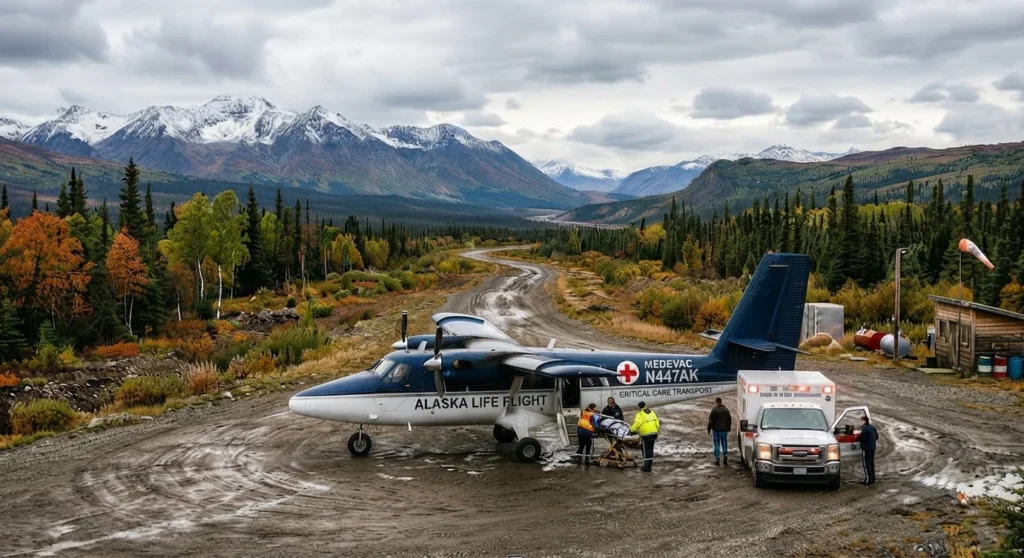
Rural Alaska care routinely involves getting patients somewhere else—Anchorage, Fairbanks, Juneau, or further. That means billing for air ambulance transport, coordinating boarding home stays, and coordinating claims across multiple providers and locations for a single episode of care. It’s a claims category most billing companies have simply never encountered, because outside Alaska it barely exists at this scale.
Staffing and Workforce Realities
Even setting billing complexity aside, rural Alaska clinics face a structural staffing problem: trained billing and coding staff tend to move to Anchorage or the Lower 48, cost of living makes retention hard, and small clinics often can’t support a full billing department in-house. This is where outsourcing solves two problems at once—not just “we don’t have the expertise” but “we genuinely can’t keep the seat filled.”
What to Ask a Medical Billing Company for Rural Healthcare Providers in Alaska
A few things worth confirming before signing anything:
- Direct examples of CAH and RHC billing work — ask for specifics, not general reassurance
- Whether they’ve handled tribal health billing in Alaska, and if not, how they’d approach getting up to speed before touching your claims
- How their system handles unreliable connectivity — batch submission and offline queuing versus software that assumes always-on internet
- Familiarity with Alaska Medicaid’s specific rules, not just general Medicaid experience
- A transparent fee structure—flat fee vs. percentage of collections, and whether setup, reporting, or cancellation come with extra charges
- HIPAA compliance and a signed Business Associate Agreement (BAA) — non-negotiable for any billing partner handling PHI
- A communication model that works on Alaska time
→ Internal link: Revenue Cycle Management, anchor text “our revenue cycle management services”