

If you are a DMEPOS supplier planning to participate in DMEPOS Competitive Bidding Round 2028, 2026 is not the year to wait.
CMS is preparing for the next round of the Medicare DMEPOS Competitive Bidding Program, with the bid window targeted for late summer or early fall 2026. Contracts and Single Payment Amounts (SPAs) are targeted to take effect no later than January 1, 2028.
The timing makes Round 2028 particularly important for suppliers. Your Medicare enrollment, accreditation, state licensure, financial preparation, bid strategy, and documentation need to be ready before the bidding window closes.
The Rapid Claim Care DME content strategy specifically identifies this topic as a time-sensitive 2026 opportunity because the preparation window is limited and the information will need ongoing updates as CMS and the Competitive Bidding Implementation Contractor (CBIC) release new guidance.
So, what exactly should DMEPOS suppliers know about Round 2028—and what can you do now to avoid scrambling when the bid window opens?
Let’s break it down.
What Is DMEPOS Competitive Bidding?
The DMEPOS Competitive Bidding Program (CBP) is a Medicare program designed to establish payment amounts for certain durable medical equipment, prosthetics, orthotics, and supplies through a competitive bidding process.
For Round 2028, CMS is implementing a nationwide Remote Item Delivery (RID) Competitive Bidding Area (CBA). This means the Round 2028 competition will cover all states, U.S. territories, and the District of Columbia under one nationwide RID CBA.
The program is currently moving forward after a temporary gap period. CMS states that the previous Round 2021 contracts for OTS back braces and OTS knee braces expired December 31, 2023, followed by a temporary gap before implementation of Round 2028.
For suppliers, this creates a major preparation opportunity.
The question is no longer whether Round 2028 is coming. The question is whether your organization will be ready when CMS opens the bid window.
When Is the DMEPOS Round 2028 Bid Window?
CMS’s current target schedule places the bid registration period and bid window in late summer or early fall 2026.
The current target timeline includes:
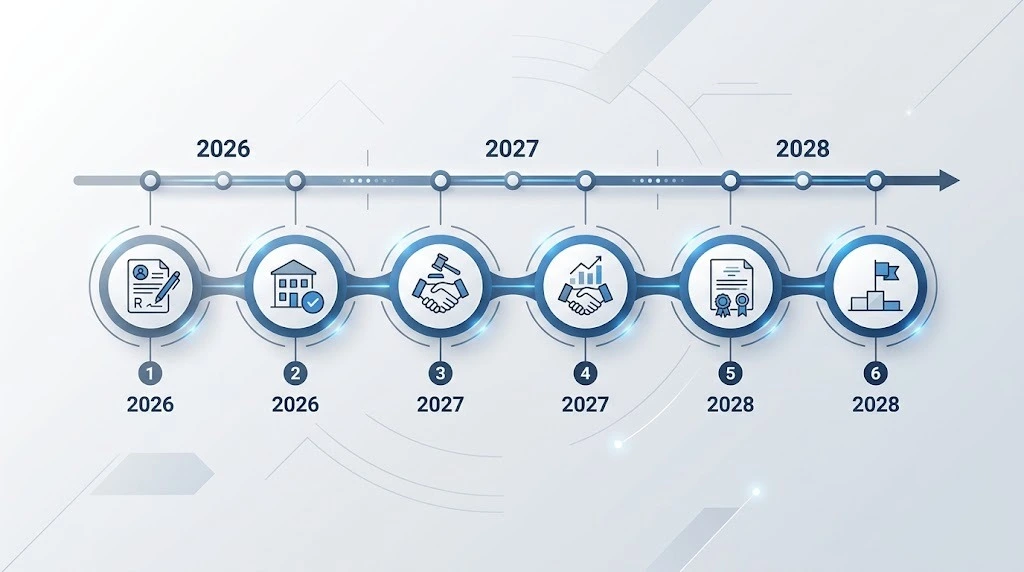
| Milestone | Current CMS Target |
| Registration and bidding information | Late spring/early summer 2026 |
| Bidder education | Late spring/early summer 2026 |
| Bidder registration | Late summer/early fall 2026 |
| Bid window | Late summer/early fall 2026 |
| Contracts and SPAs announced | Late summer/early fall 2027 |
| Round 2028 begins | No later than January 1, 2028 |
CMS notes that these dates are target dates, so suppliers should monitor official CBIC communications rather than rely on a static calendar.
That makes preparation especially important right now.
Which DMEPOS Product Categories Are Included in Round 2028?
CMS currently identifies seven product categories for Round 2028:
- Class II Continuous Glucose Monitors (CGMs) and Insulin Pumps
- Hydrophilic Urinary Catheters
- Ostomy Supplies
- Urological Supplies
- Off-the-Shelf (OTS) Back Braces
- OTS Knee Braces
- OTS Upper Extremity Braces
CMS’s current materials clarify that hydrophilic urinary catheters are a separate category from the broader urological supplies category.
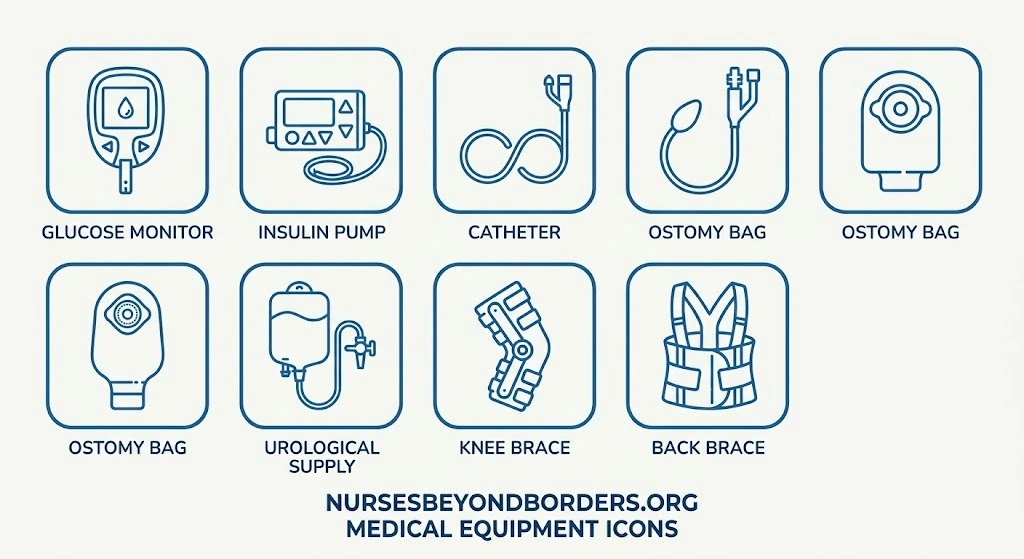
The seven categories will be included in the Nationwide Remote Item Delivery Program, meaning suppliers participating in these competitions need to understand the operational requirements of nationwide remote delivery.
Important update for suppliers
The original Rapid ClaimCare content strategy identified the same seven categories but listed a $50,000 bid surety bond. Current CMS/CBIC guidance has since specified a $100,000 bid surety bond for the nationwide RID CBA.
Because this is a time-sensitive topic, suppliers should always verify the latest CBIC requirements before submitting a bid.
What Is the Round 2028 Bid Surety Bond?
The bid surety bond is one of the most important financial requirements for suppliers planning to participate.
For Round 2028, CMS requires a $100,000 bid surety bond for the nationwide Remote Item Delivery CBA. The bond must be obtained from an authorized surety listed on the U.S. Department of the Treasury’s List of Certified Companies.
Suppliers must upload proof of the bond into the DMEPOS CBP secure portal, Connexion, before the bid window closes.
The good news is that suppliers do not need a separate bond for every product category. One bid surety bond covers the CBA regardless of how many Round 2028 product categories the supplier bids on.
However, the bond can be forfeited under certain circumstances—for example, when a supplier receives a contract offer under the applicable conditions but does not accept the contract.

Licensure Is a Critical Round 2028 Requirement
One of the easiest mistakes suppliers can make is waiting too long to address state licensing.
CMS requires bidders to have all applicable state and territory licenses for the products they are bidding on by the close of the bid window. Those licenses must be current and reflected in PECOS.
Importantly, suppliers do not necessarily need licenses in every state and territory. The requirement depends on where and how the products will be furnished and the applicable state or territory requirements. CMS also notes that certain exemptions or special conditions may apply.

Your Round 2028 licensure checklist should include:
- Review every product category you plan to bid on.
- Identify applicable state and territory licensing requirements.
- Verify license expiration dates.
- Confirm licenses are reflected correctly in PECOS.
- Review any applicable exemptions.
- Resolve missing or outdated licenses before the bid window closes.
Don’t leave this until the final week.
Medicare Enrollment and Accreditation Matter
CMS has also emphasized the importance of getting supplier enrollment and accreditation information ready before the Round 2028 bid window.
In July 2026, CMS advised suppliers to make sure their CMS-855S Medicare enrollment application was current with the applicable Medicare Enrollment Contractor and that accreditation information was properly reflected in PECOS.
There was also a temporary six-month moratorium on certain initial DMEPOS supplier enrollment applications beginning February 27, 2026. That moratorium expired on August 27, 2026, and CMS is now accepting initial enrollment applications again.
For suppliers planning to bid, that creates an immediate action item:
If enrollment changes are necessary for your Round 2028 strategy, do not delay the application process.
Incomplete applications or processing delays could interfere with your ability to meet bidding requirements.
How Will Round 2028 Pricing Work?
This is one of the biggest changes suppliers need to understand.
For Round 2028, CMS is using a lead item bidding and pricing methodology. Instead of requiring suppliers to submit a bid amount for every HCPCS code in a product category, suppliers submit a bid for the lead item.
The lead-item bid is then used to establish payment amounts for the other items in the category using CMS’s applicable pricing methodology and relative ratios.
Even though suppliers submit a bid for the lead item, they must consider the cost of furnishing all items within the product category when developing that bid.

This is where claims and revenue data become extremely valuable.
A supplier shouldn’t simply ask:
“What price can we bid?”
Instead, ask:
“What is our actual cost and net collected revenue for every relevant HCPCS code, and can we sustainably furnish these products at the resulting payment amounts?”
That distinction could make a major difference to bid profitability.
What Is the 75th Percentile Pricing Method?
Round 2028 uses a 75th-percentile methodology for Single Payment Amounts for lead items.
CMS explains that the SPA for a lead item is based on the 75th percentile of winning bid amounts from suppliers in the winning range.
This is important because suppliers should not build their entire strategy around the assumption that the lowest submitted bid automatically becomes the Medicare payment amount.
Instead, suppliers need to understand:
- Their own costs
- Their historical reimbursement
- Their expected utilization
- Product-category economics
- Delivery costs
- Administrative expenses
- Desired margins
- Potential changes in payment amounts
CMS also provides a Lead Item Pricing Calculator to assist bidders with understanding lead and non-lead items and potential SPAs.
How Many Contracts Will CMS Award?
CMS has published its current methodology for determining the number of Round 2028 contracts.

Based on the methodology currently described by CMS, the expected initial number of contracts includes:
| Product Category | Current Number of Contracts |
| Class II CGMs & Insulin Pumps | 10 |
| Hydrophilic Urinary Catheters | 10 |
| OTS Back Braces | 3 |
| OTS Knee Braces | 4 |
| OTS Upper Extremity Braces | 5 |
| Ostomy Supplies | 6 |
| Urological Supplies | 5 |
CMS notes that additional contracts may be awarded to address small-supplier requirements and beneficiary demand.
Therefore, suppliers should treat these numbers as part of the current Round 2028 framework—not as guaranteed final contract counts.
How DMEPOS Suppliers Should Prepare for Round 2028
Preparation should begin with the fundamentals.
1. Choose Your Product Categories
Determine which of the seven Round 2028 categories fit your current business model.
Don’t automatically bid on every category.
Evaluate your:
- Product expertise
- Supplier relationships
- Delivery capabilities
- Medicare volume
- Historical reimbursement
- Operating costs
- Profit margins
2. Review Your Medicare Enrollment
Confirm that your CMS-855S information is accurate and that your enrollment information is properly reflected in PECOS.
If something needs to be updated, start now.
3. Verify Accreditation
Make sure your accreditation covers the products and locations relevant to your bidding strategy.
Accreditation delays can become a serious problem when deadlines are approaching.
4. Audit Your State Licenses
Create a spreadsheet showing:
State → Product Category → License Required → Expiration Date → PECOS Status
This simple process can reveal problems before the bid window opens.
5. Analyze Your Claims Data
This may be the most valuable step.
Review historical data for:
- Allowed amounts
- Payments received
- Adjustments
- Denials
- Write-offs
- Delivery expenses
- Product costs
- Payer mix
- HCPCS-level revenue
The Rapid ClaimCare content strategy specifically recommends a follow-up guide on pricing a Round 2028 bid using the supplier’s own claims data, emphasizing collected net revenue rather than gross charges.
6. Calculate Your Real Cost
Your bid needs to account for more than the product purchase price.
Consider:
- Product acquisition costs
- Shipping
- Warehouse expenses
- Staff salaries
- Billing costs
- Customer service
- Claims processing
- Denial management
- Technology
- Compliance
- Accreditation
- Administrative overhead
A bid that looks profitable on paper can become unprofitable once the complete cost of fulfillment is included.
7. Prepare Your Bid Documentation
Before the bid window opens, establish an internal checklist for:
- Medicare enrollment
- Accreditation
- State licenses
- PECOS
- Bid surety bond
- Financial information
- Product-category data
- Claims and reimbursement analysis
- Operational capacity
The goal is simple: when the bid window opens, you should be reviewing your final numbers—not starting your preparation.
Why Round 2028 Preparation Matters for DME Billing
Competitive bidding doesn’t end with submitting a bid.
If you become a contract supplier, your organization will need to manage billing, documentation, claims, reimbursement, beneficiary requirements, and operational compliance under the new contract.
That makes accurate DME billing infrastructure extremely important.

A strong billing workflow can help suppliers monitor:
- HCPCS-level reimbursement
- Claim denials
- Payment variance
- Documentation problems
- Underpayments
- Accounts receivable
- Revenue by product category
For DMEPOS suppliers preparing for Round 2028, billing data isn’t just an accounting record—it can become a strategic bidding resource.
Round 2028: Your 2026 Action Checklist
Before the bid window closes, suppliers should aim to have:
☑ Selected target product categories
☑ Reviewed Medicare enrollment
☑ Confirmed accreditation
☑ Verified applicable state and territory licenses
☑ Checked PECOS information
☑ Obtained the required $100,000 bid surety bond
☑ Analyzed historical claims data
☑ Calculated net collected revenue
☑ Reviewed product and delivery costs
☑ Built a sustainable bid model
☑ Reviewed CMS/CBIC bidder education
☑ Prepared required bidding documentation
☑ Monitored official CMS updates
CMS continues to update the CBIC website with Round 2028 resources, so suppliers should monitor the official program information rather than rely solely on older articles or third-party summaries.
Final Thoughts: Don’t Wait for the Bid Window
DMEPOS Competitive Bidding Round 2028 is one of the most important DME topics for suppliers to address in 2026.
The opportunity is time-sensitive. CMS is targeting the bid window for late summer or early fall 2026, while contracts and SPAs are expected to take effect no later than January 1, 2028.
The suppliers most likely to be prepared are the ones that start with data—not guesswork.
Review your enrollment. Verify your licenses. Confirm accreditation. Understand the bid surety bond. Analyze your claims. Calculate your true costs. And build your bid around sustainable economics rather than simply trying to submit the lowest possible number.
Need help preparing your DME billing data for Round 2028? Rapid ClaimCare can help DMEPOS suppliers review claims, reimbursement data, billing performance, and revenue information before they make important financial decisions.
👉 Request a Free DME Claims Review and turn your billing data into actionable insight for your Round 2028 preparation.
FAQs About DMEPOS Competitive Bidding 2028
1. What is DMEPOS Competitive Bidding Round 2028?
Round 2028 is the next round of the Medicare DMEPOS Competitive Bidding Program. CMS is implementing the round through a nationwide Remote Item Delivery competitive bidding area covering all states, territories, and the District of Columbia.
2. When will the Round 2028 bid window open?
CMS currently targets the bidder registration period and bid window for late summer or early fall 2026. Specific dates should be confirmed through official CMS/CBIC announcements.
3. Which products are included in Round 2028?
The seven categories are Class II CGMs and insulin pumps, hydrophilic urinary catheters, ostomy supplies, urological supplies, OTS back braces, OTS knee braces, and OTS upper extremity braces.
4. Is Round 2028 nationwide?
Yes. CMS plans to use one nationwide Remote Item Delivery CBA covering all states, territories, and the District of Columbia.
5. How much is the Round 2028 bid surety bond?
CMS currently requires a $100,000 bid surety bond for the nationwide Remote Item Delivery CBA.
6. Do suppliers need a separate bond for every product category?
No. One bid surety bond is required for the nationwide CBA regardless of how many product categories the supplier bids on.
7. Do DMEPOS suppliers need state licenses to participate?
Suppliers must have applicable state and territory licenses for the products they bid on, with required licenses current and reflected in PECOS by the close of the bid window. Certain exemptions may apply depending on the circumstances.
8. How will CMS calculate Round 2028 payment amounts?
CMS is using a lead-item bidding and pricing methodology. Suppliers submit a bid for the lead item, and the applicable methodology is used to establish SPAs for lead and non-lead items.
9. What is the 75th percentile in Round 2028 pricing?
For lead items, the SPA is based on the 75th percentile of winning bid amounts under CMS’s Round 2028 methodology.
10. Should suppliers analyze their claims before bidding?
Absolutely. Historical claims and payment data can help suppliers understand actual reimbursement, utilization, denials, and net collections. This can support more informed and sustainable bid pricing.
11. Can a supplier bid on multiple product categories?
Yes. Suppliers can participate in multiple Round 2028 product-category competitions, subject to meeting the applicable eligibility, licensure, accreditation, and bidding requirements.
12. Where should suppliers monitor Round 2028 updates?
The official CMS and DMEPOS Competitive Bidding Implementation Contractor (CBIC) resources should be treated as the primary sources for Round 2028 updates, bidder education, requirements, and announcements