

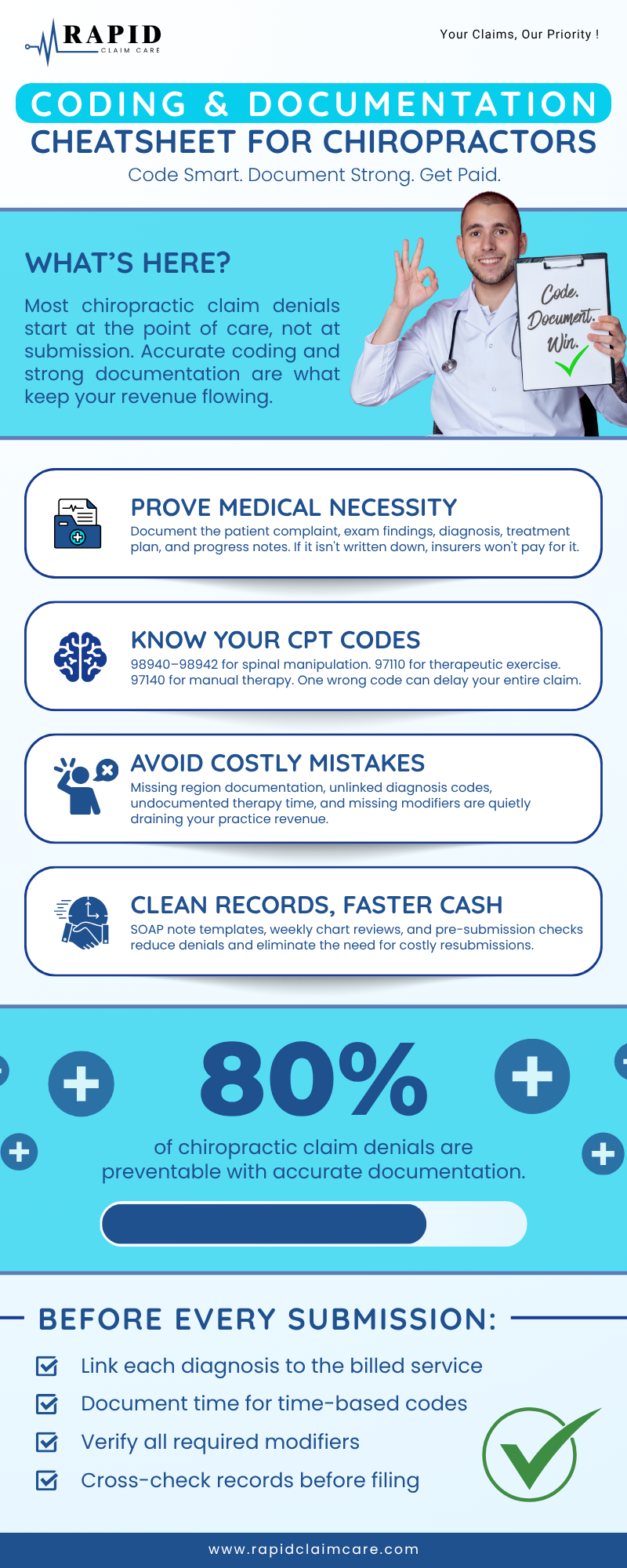
Accurate coding and thorough documentation are the foundation of successful chiropractic billing. Insurance carriers require clear proof of medical necessity and precise CPT coding before approving reimbursement.
Implementing structured documentation and coding processes can significantly reduce denials and speed up claims processing.

Medical necessity is one of the most common reasons chiropractic claims are denied. Payers must see objective evidence that treatment is required to correct or improve a patient’s condition, not simply maintain it.
To properly document medical necessity, include:
Avoid vague phrases such as “patient feeling better.” Instead, document measurable outcomes like improved mobility, pain scale changes, or functional improvement.
Strong documentation protects your practice from audits and supports faster claim approvals.

Using the correct CPT code ensures accurate reimbursement and compliance.
Before submitting claims, verify that documentation clearly supports the code selected. Regular internal coding reviews can prevent costly errors.

Disorganized records delay billing, increase denials, and slow reimbursement.
To improve efficiency:
An organized documentation system improves clean claim rates and reduces the need for resubmissions.

When chiropractic documentation and coding are accurate:
Strong billing starts long before claim submission, it begins with proper documentation at the point of care.
Discover your top denial reasons with a free billing analysis.
Limited slots!

Kamran Kazam is the Director of Billing at Rapid ClaimCare with over a decade of experience optimizing revenue cycles for chiropractic clinics, mental health practices, and multi-specialty groups. He specializes in improving clean claim rates, reducing denials, and accelerating cash flow through data-driven revenue cycle management strategies. Kamran works closely with healthcare providers to streamline billing operations, strengthen compliance, and increase collection performance without adding administrative burden.
The most important requirement is clearly documenting medical necessity. This includes the patient’s complaint, objective exam findings, diagnosis, treatment plan, and measurable progress. Without this, insurance companies are likely to deny claims.
The most commonly used chiropractic CPT codes are: 98940 (1–2 spinal regions), 98941 (3–4 spinal regions), 98942 (5 spinal regions), 97110 (therapeutic exercises), 97140 (manual therapy) Using the correct code with proper documentation ensures accurate reimbursement.
Chiropractic claims are most often denied due to lack of medical necessity documentation, incorrect CPT coding, missing modifiers, or insufficient progress notes. Ensuring accurate and detailed records significantly reduces denials.
Chiropractors can improve approval rates by using structured SOAP notes, documenting measurable patient progress, linking diagnosis codes correctly, and reviewing claims before submission to ensure accuracy and compliance.
Best practices include using standardized templates, maintaining digital records, documenting objective findings, tracking patient progress, and performing regular chart audits. Organized documentation leads to faster claims processing and fewer errors.