Workers’ compensation billing can be significantly more complex than traditional medical billing. Between state-specific regulations, documentation requirements, authorization rules, and reimbursement guidelines, even minor mistakes can lead to claim denials, payment delays, compliance risks, and lost revenue.
For healthcare providers, understanding the most common workers’ compensation billing errors is essential for maintaining a healthy revenue cycle and ensuring injured employees receive uninterrupted care.
In this guide, we’ll explore the most frequent workers’ compensation billing mistakes, why they occur, and the best strategies to prevent them.
What Are Workers’ Compensation Billing Errors?
Workers’ compensation billing errors are mistakes made during the documentation, coding, submission, authorization, or reimbursement stages of a workers’ compensation claim.
These errors can negatively impact:
- Claim approval rates
- Reimbursement timelines
- Revenue collection
- Regulatory compliance
- Administrative efficiency
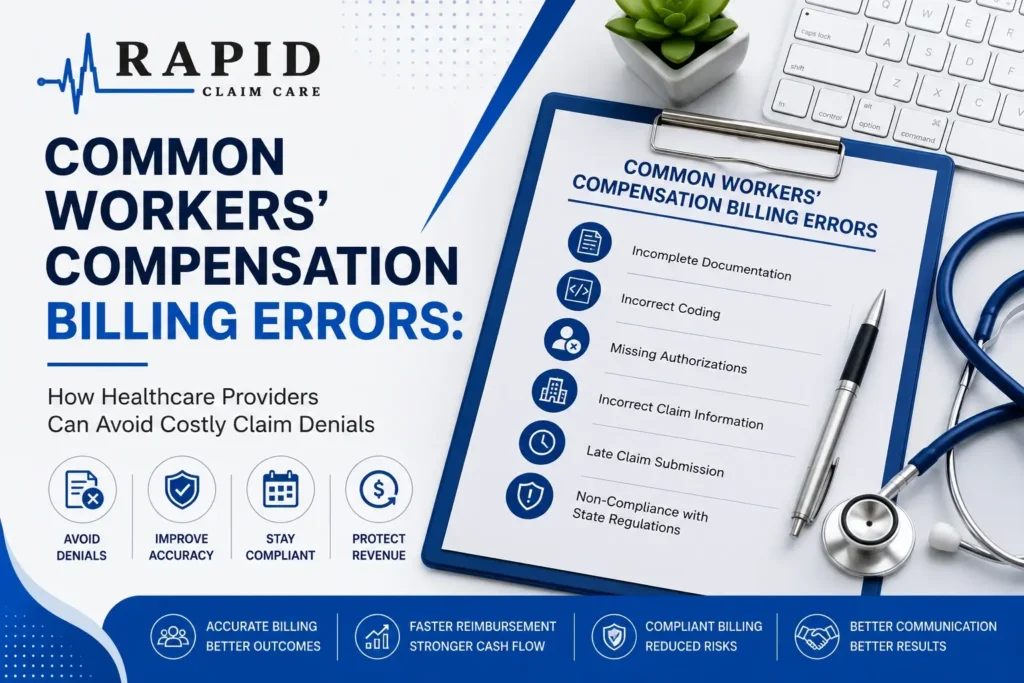
Common workers’ compensation billing errors include incomplete documentation, incorrect coding, missing authorizations, inaccurate claim information, late claim submissions, and failure to comply with state-specific workers’ compensation regulations.
Why Billing Errors Matter in Workers’ Compensation Claims
Workers’ compensation insurers closely scrutinize claims before approving reimbursement.
Unlike traditional health insurance claims, workers’ compensation cases require detailed evidence proving:
- The injury is work-related
- Treatment is medically necessary
- Services are properly documented
- Billing complies with applicable regulations
Even small mistakes can trigger audits, requests for additional information, payment reductions, or claim denials.
Understanding the entire Workers’ Compensation Claim Process can help providers identify potential issues before claims are submitted and improve overall billing performance.
Error #1: Incomplete Medical Documentation
One of the most common reasons workers’ compensation claims are denied is insufficient documentation.
Healthcare providers should document:
- Date of injury
- Mechanism of injury
- Workplace incident details
- Diagnosis
- Treatment plan
- Progress notes
- Work restrictions
- Follow-up recommendations
Missing information makes it difficult for insurers to determine medical necessity and claim validity.
How to Avoid It
Use standardized documentation workflows and ensure providers complete all required records before claim submission.
Error #2: Incorrect Diagnosis and Procedure Coding
Accurate coding is essential for successful reimbursement.
Common coding issues include:
- Incorrect ICD codes
- Outdated diagnosis codes
- CPT coding errors
- Missing modifiers
- Coding that does not match documentation
Coding inconsistencies often result in payment delays or denials.
How to Avoid It
Perform regular coding audits and ensure coding teams remain current on regulatory updates and payer requirements.
Many healthcare organizations rely on expert Medical Billing Services to improve coding accuracy and reduce reimbursement risks.
Error #3: Missing Prior Authorizations
Workers’ compensation insurers frequently require authorization before approving specific treatments.
Common authorization requirements include:
- Surgeries
- MRI scans
- Physical therapy
- Specialist referrals
- Durable medical equipment
Providing services without approval may result in non-payment.
How to Avoid It
Verify authorization requirements before treatment and maintain documentation of all approvals.
Error #4: Incorrect Employer or Insurance Information
Workers’ compensation claims involve multiple parties, including:
- Employee
- Employer
- Insurance carrier
- Claims adjuster
Errors in claim information can prevent claims from reaching the correct payer.
Common mistakes include:
- Wrong claim number
- Incorrect employer details
- Invalid insurance information
- Missing adjuster contacts
How to Avoid It
Verify claim information during patient intake and before every claim submission.
Error #5: Late Claim Submission
Workers’ compensation programs often enforce strict filing deadlines.
Submitting claims after the allowable timeframe may result in:
- Claim rejection
- Delayed reimbursement
- Reduced payments
How to Avoid It
Implement automated claim tracking systems and establish internal submission deadlines.
Error #6: Failure to Follow State-Specific Regulations
Workers’ compensation billing requirements vary across states.
Differences may include:
- Fee schedules
- Documentation requirements
- Submission timelines
- Reimbursement methodologies
- Authorization procedures
Failure to follow state regulations can create compliance concerns and reimbursement issues.
How to Avoid It
Regularly review state-specific workers’ compensation regulations and maintain compliance updates for billing staff.
Healthcare organizations operating in multiple regions often utilize specialized Workers’ Compensation Billing Services to manage complex state-specific requirements efficiently.
Error #7: Lack of Medical Necessity Documentation
Workers’ compensation insurers require proof that treatment is medically necessary and directly related to the workplace injury.
Insufficient evidence may lead to:
- Payment denials
- Treatment disputes
- Additional review requests
How to Avoid It
Clearly explain treatment rationale and document how each service supports the patient’s recovery.
Error #8: Failure to Track Claim Status
Many practices submit claims but fail to monitor their progress.
Without proactive follow-up:
- Denials go unnoticed
- Appeals are delayed
- Revenue remains uncollected
How to Avoid It
Implement claim management procedures that monitor claim status from submission through payment.
Error #9: Inadequate Communication Between Stakeholders
Workers’ compensation claims often involve communication among:
- Healthcare providers
- Employers
- Insurance adjusters
- Attorneys
- Rehabilitation specialists
Communication breakdowns can create delays and confusion.
How to Avoid It
Establish clear communication channels and maintain detailed records of all interactions.
Error #10: Weak Internal Billing Processes
Inefficient workflows often contribute to recurring billing problems.
Examples include:
- Manual data entry errors
- Inconsistent documentation standards
- Lack of billing audits
- Poor denial management
How to Avoid It
Create standardized procedures and regularly evaluate billing performance metrics.
How Billing Errors Impact Revenue Cycle Performance
Workers’ compensation billing mistakes can significantly affect healthcare organizations.
Potential consequences include:
- Increased denial rates
- Delayed reimbursements
- Higher administrative costs
- Reduced cash flow
- Compliance risks
- Lower operational efficiency
Preventing errors improves both financial performance and patient care outcomes.
Best Practices for Reducing Workers’ Compensation Billing Errors
Verify Information Before Treatment
Confirm claim details, employer information, and insurance coverage early.
Standardize Documentation
Create documentation templates that support consistency.
Conduct Routine Billing Audits
Regular audits help identify recurring problems before they impact revenue.
Monitor Authorization Requirements
Track approvals throughout the treatment process.
Train Staff Continuously
Workers’ compensation regulations evolve frequently.
Ongoing education supports compliance and billing accuracy.
Utilize Professional Billing Support
Experienced Medical Billing Services providers can help healthcare organizations streamline workflows, improve claim accuracy, reduce denials, and accelerate reimbursement.
Understanding Related Billing Processes
Healthcare providers managing workers’ compensation claims often encounter other specialized insurance billing models.
To learn how automobile injury claims differ from workers’ compensation claims, read our detailed guide on the No-Fault Billing Process Explained.
This resource outlines claim workflows, reimbursement procedures, documentation requirements, and billing considerations specific to no-fault insurance cases.
Frequently Asked Questions
What is the most common workers’ compensation billing error?
Incomplete medical documentation is one of the most common reasons claims are delayed or denied.
Why do workers’ compensation claims get denied?
Claims may be denied because of coding errors, missing documentation, authorization issues, inaccurate claim information, or late submissions.
How can healthcare providers reduce workers’ compensation billing errors?
Providers can improve outcomes by implementing standardized workflows, conducting audits, verifying information, and maintaining compliance with regulations.
Do workers’ compensation billing requirements vary by state?
Yes. Each state may have unique fee schedules, documentation requirements, and reimbursement regulations.
Can outsourced billing services help reduce workers’ compensation claim denials?
Yes. Professional billing teams often have specialized expertise that improves claim accuracy, compliance, and reimbursement performance.
Conclusion
Workers’ compensation billing errors can create significant financial and administrative challenges for healthcare providers. From documentation mistakes and coding inaccuracies to authorization issues and regulatory compliance concerns, even minor errors can delay payments and increase denial rates.
By understanding the most common workers’ compensation billing mistakes and implementing proactive prevention strategies, healthcare organizations can improve claim approval rates, strengthen compliance, and optimize revenue cycle performance.
A well-structured billing process not only protects revenue but also supports faster treatment approvals and better outcomes for injured workers.