

For years, chiropractors have been fed the same advice:
👉 See more patients
👉 Accept shrinking insurance reimbursements
👉 Make it up with volume
But there’s a hard truth.
I recently worked with a chiropractor in California, let’s call him Dr. K. His chiropractic clinic was busy. His reputation strong. Yet his practice revenue had stalled.
If you’re a chiropractor reading this, this may sound uncomfortably familiar:
Insurance payouts kept declining
Patients discontinued care once pain subsided
And the most frustrating part? Patients were purchasing braces, orthotics, and TENS units online, after he recommended them.
He was delivering clinical value. Someone else was capturing the revenue.
That’s when we introduced Durable Medical Equipment (DME) into his chiropractic practice.

Many chiropractors hear DME and think retail.
In reality, DME for chiropractors is about extending care beyond the adjustment table and improving outcomes at home.
Common DME used in chiropractic clinics includes:
When implemented correctly, DME:
Now zoom out.
Demand for braces, orthotics, and recovery equipment is exploding.
Yet most chiropractic clinics are not structured to benefit from it.

The clinics succeeding with DME aren’t doing anything flashy. They’re doing something smarter.
They’re structured.
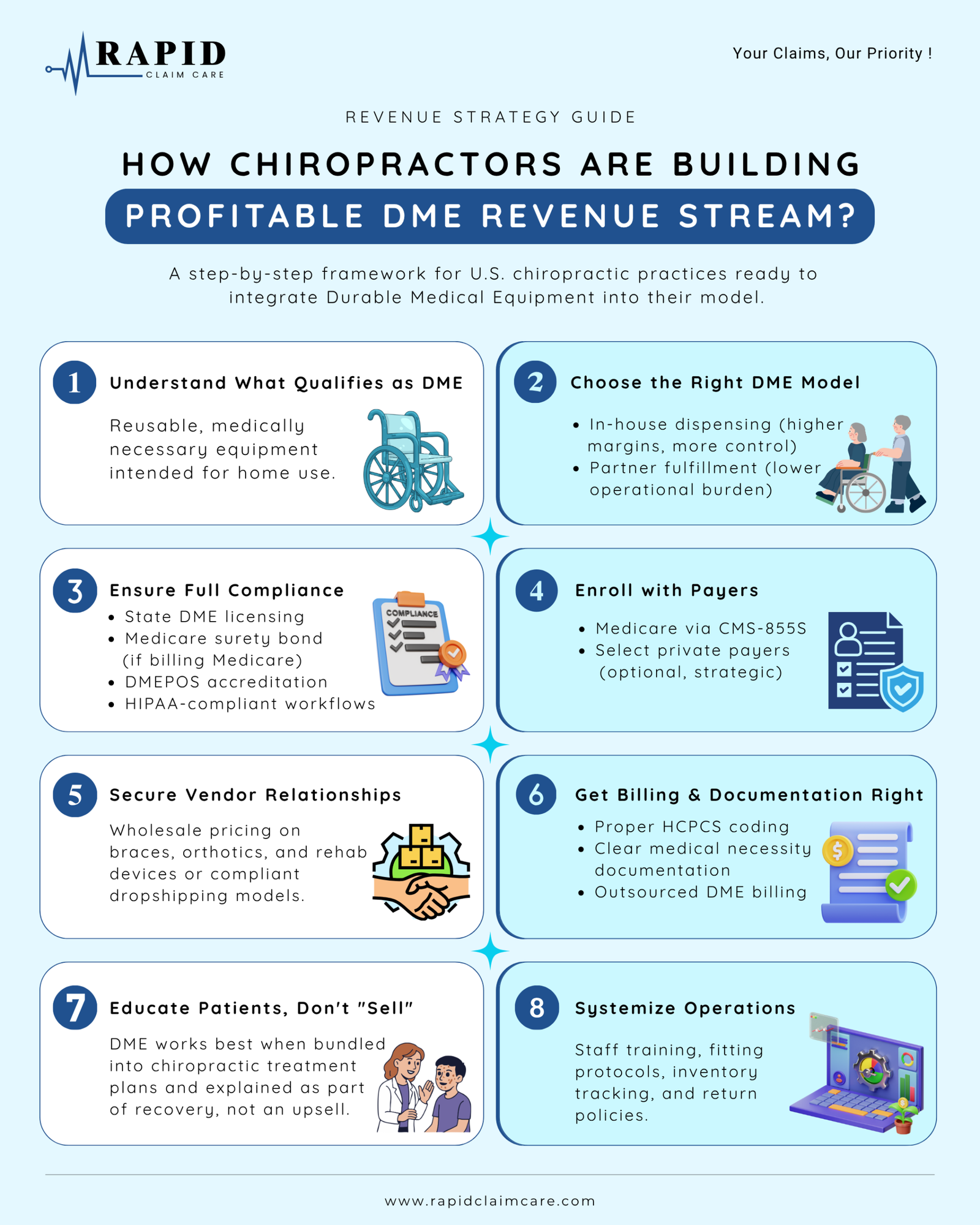
Here’s the framework high-performing chiropractic practices follow:
1. Understand What Qualifies as DME
Reusable, medically necessary equipment intended for home use.
2. Choose the Right DME Model
3. Ensure Full Compliance
4. Enroll with Payers
5. Secure Vendor Relationships
Wholesale pricing on braces, orthotics, and rehab devices—or compliant dropshipping models.
6. Get Billing & Documentation Right
7. Educate Patients, Don’t “Sell”
DME works best when bundled into chiropractic treatment plans and explained as part of recovery, not an upsell.
8. Systemize Operations
Staff training, fitting protocols, inventory tracking, and return policies.

Within 12 months of implementing DME correctly:
No longer working longer hours. Just running a smarter chiropractic business.

Most chiropractors don’t have a patient problem.
They have a monetization and structure problem.
DME is no longer optional. It’s becoming a core revenue pillar for modern chiropractic practices, especially in California, Florida, and senior-dense U.S. markets.

We help chiropractors launch and scale fully compliant DME services, including:
✔ DME licensing & accreditation
✔ Medicare and payer enrollment
✔ Vendor sourcing & pricing strategy
✔ Billing and documentation systems
✔ Marketing and patient education integration
If you’re tired of watching revenue walk out the door, and ready to build a chiropractic clinic that scales without burnout, let’s connect.
Because surviving in chiropractic isn’t the goal anymore. Thriving is.
Discover the top reasons chiropractic DME claims get denied and how to fix them with a free billing audit.
Limited slots!

Jabbar Khan is a Business Development Strategist specializing in DME growth and strategic partnerships within the healthcare space. As a DME business development strategist and podcast host, he delivers actionable industry insights that help healthcare organizations scale operations, strengthen referral networks, and drive sustainable revenue growth. Through his work, Jabbar focuses on aligning operational efficiency with business expansion opportunities across the evolving medical landscape.
DME stands for Durable Medical Equipment and includes items like lumbar braces, TENS units, cervical traction devices, and orthopedic supports prescribed for repeated home use. Adding DME to a chiropractic practice helps improve patient compliance, enhances clinical outcomes, and creates a reliable additional revenue stream beyond traditional adjustment-based income.
Yes, chiropractors in the US can sell DME and bill insurance for it, but they must first enroll as DMEPOS suppliers and obtain accreditation from a CMS-approved organization. Each state also has its own licensing and documentation requirements, so compliance at both the federal and state level is essential before getting started.
Unlike adjustment income that depends on scheduled appointments, DME generates revenue continuously. Patients purchase or receive prescribed equipment directly from the practice, creating a consistent income stream that supplements clinical services and contributes to the long-term financial sustainability of the practice.
The most commonly used DME in chiropractic practices includes cervical traction devices, lumbar support braces, TENS units, orthopedic joint stabilizers, and cervical pillows designed to improve spinal alignment. These products directly complement chiropractic treatment plans and support recovery between visits.
When patients receive DME directly from their chiropractor, they are far more likely to use it consistently because the recommendation comes from a trusted provider who understands their specific condition. This leads to better adherence to treatment plans, faster recovery, and a more complete care experience without the patient needing to seek equipment elsewhere.