

If you’re a small practice owner, understanding why medical claims get denied is critical, because claim denials aren’t just frustrating, they’re costing you real money. Industry data shows that practices lose an average of 5-10% of their revenue to preventable claim denials, and many never resubmit those claims.
The good news? Most denials are preventable when you know what to look for.
After processing thousands of claims for small practices, we’ve identified the seven most common denial reasons and, more importantly, how to fix them before they hit your bottom line.
Most medical claim denials stem from preventable administrative errors, such as incorrect patient information, missing authorizations, or outdated codes.
Small practices lose 5–10% of annual revenue due to preventable denials, often because claims are never corrected or resubmitted.
Front-end processes matter more than back-end fixes, with eligibility verification, prior authorization checks, and accurate registration playing a major role in approval rates.
Coding accuracy and timely filing are critical for reimbursement, as even minor mistakes or missed deadlines can lead to permanent revenue loss.
Proactive denial prevention is more cost-effective than appeals, reducing staff workload, improving cash flow, and minimizing patient frustration.
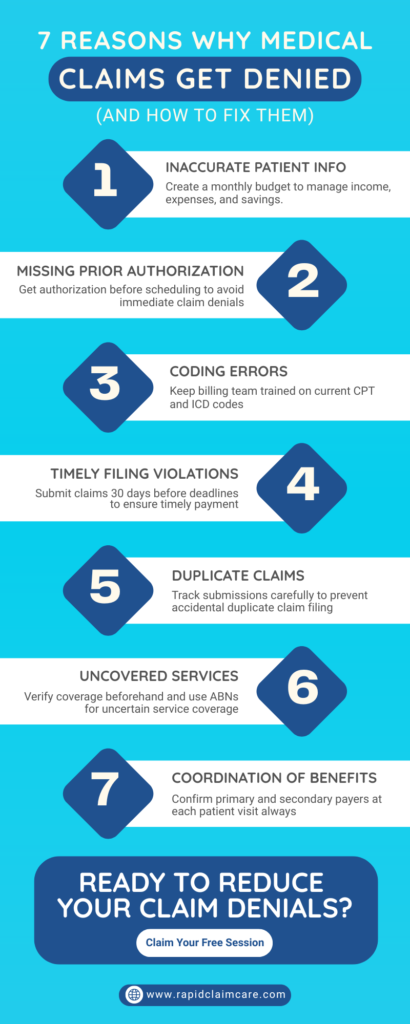
The Problem: Missing or incorrect patient demographics (name spelling, date of birth, insurance ID) are among the top denial reasons. Even a single digit error can trigger a rejection.
The Fix: Implement a verification process at every patient visit. Train front desk staff to photocopy insurance cards, verify information in real-time, and confirm eligibility before the appointment. Consider investing in eligibility verification software that checks coverage automatically.
The Problem: Many procedures, medications, and specialist visits require prior authorization. Submitting claims without proper authorization is like sending an invoice without a purchase order, it gets rejected immediately.
The Fix: Create a master list of services that commonly require prior authorization for your specialty. Build authorization checks into your scheduling process, not your billing process. Assign a dedicated team member to track authorization approvals and expiration dates.
The Problem: Using incorrect CPT codes, outdated ICD-10 codes, or mismatched diagnosis and procedure codes will trigger automatic denials. Medical coding updates happen regularly, and staying current is critical.
The Fix: Invest in ongoing training for your billing team. Subscribe to coding update alerts, and consider periodic audits of your most frequently used codes. When in doubt, document thoroughly and code conservatively.
The Problem: Every insurance company has different filing deadlines, typically ranging from 30 to 365 days from the date of service. Miss the deadline, and you’re out of luck, these claims are almost never paid.
The Fix: Track your submission timeline closely. Set internal deadlines that are 30 days earlier than the insurance deadline to give yourself buffer room. Automate reminders for aging claims that haven’t been submitted yet.
The Problem: Submitting the same claim twice, even by accident, results in automatic denial. This often happens when practices don’t have clear tracking systems or when there’s poor communication between billing staff.
The Fix: Implement a robust claim tracking system that flags potential duplicates before submission. Establish clear protocols about when resubmission is appropriate versus when you need to submit an appeal or corrected claim.
The Problem: Not all services are covered by all plans. Cosmetic procedures, experimental treatments, or services deemed “not medically necessary” will be denied, leaving you with the difficult choice of billing the patient or writing off the charge.
The Fix: Verify coverage for non-routine procedures before scheduling. Have patients sign Advanced Beneficiary Notices (ABNs) when services might not be covered. Set clear payment expectations upfront to avoid surprise bills.
The Problem: When patients have multiple insurance policies, claims must be submitted in the correct order. Sending to the wrong payer first creates a cascade of denials and resubmissions.
The Fix: Always ask patients about additional coverage during registration. Verify primary, secondary, and tertiary payer information at each visit. Understand the “birthday rule” for dependent children with two insured parents.

Beyond the obvious revenue loss, claim denials create hidden costs: staff time spent on rework, delayed cash flow, patient dissatisfaction, and the administrative burden of appeals. For small practices operating on thin margins, these costs add up quickly.
The solution isn’t just fixing denials after they happen, it’s preventing them in the first place through better processes, staff training, and expert oversight.

Wondering how many preventable denials are slipping through your system?
We’ll analyze your claims data, identify your top denial reasons, and show you exactly where revenue is leaking from your practice.
Ready to stop leaving money on the table?
Let’s schedule your complimentary billing analysis.
What's been your biggest challenge with claim denials? Drop a comment below, We'd love to hear what's working (or not working) for your practice. Discover your top denial reasons with a free billing analysis.
Limited slots!

Kamran Kazam is the Director of Billing at Rapid ClaimCare with over a decade of experience optimizing revenue cycles for chiropractic clinics, mental health practices, and multi-specialty groups. He specializes in improving clean claim rates, reducing denials, and accelerating cash flow through data-driven revenue cycle management strategies. Kamran works closely with healthcare providers to streamline billing operations, strengthen compliance, and increase collection performance without adding administrative burden.
Medical claims are commonly denied due to errors like incorrect patient information, missing prior authorizations, coding mistakes, or missed filing deadlines. Most denials are preventable with proper verification and billing processes.
Incomplete or inaccurate patient information, such as wrong insurance IDs or date of birth, is one of the top causes of claim denials and can lead to immediate rejections.
Small practices can reduce denials by verifying insurance eligibility, checking prior authorizations before services, using up-to-date medical codes, and tracking claims closely to meet payer deadlines.
Yes. Many denied claims can be corrected and resubmitted successfully. However, practices often lose revenue by not appealing preventable denials due to time or staffing constraints.
Industry data shows practices lose an average of 5–10% of revenue annually due to preventable medical claim denials, along with added administrative costs and delayed cash flow.